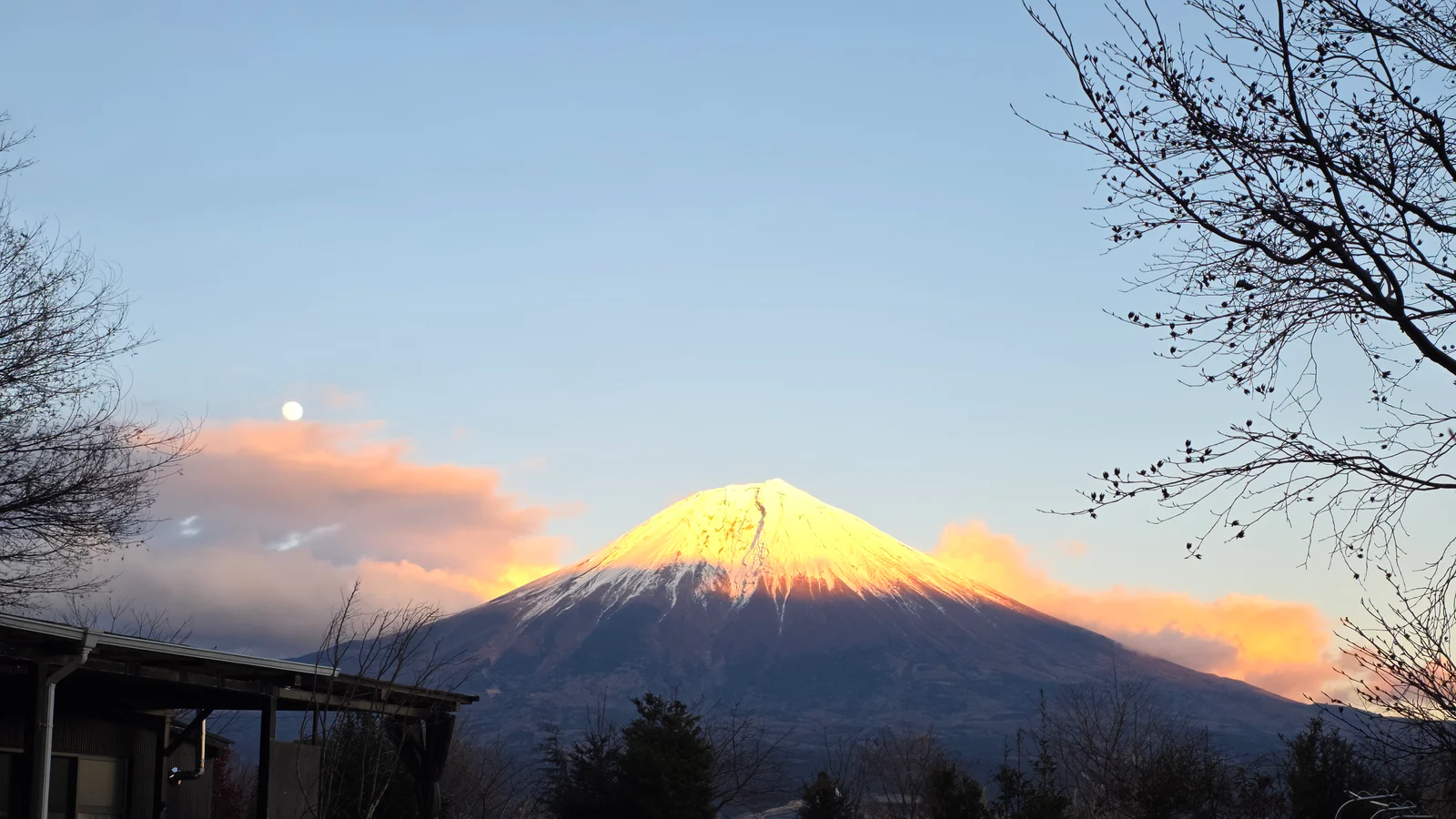
January 2, 2026, near sunset.
Lake Tanuki was our last stop of the day. We had seen Mount Fuji clearly from several places since morning, but by the time we reached the lake, more clouds were beginning to gather around the mountain.
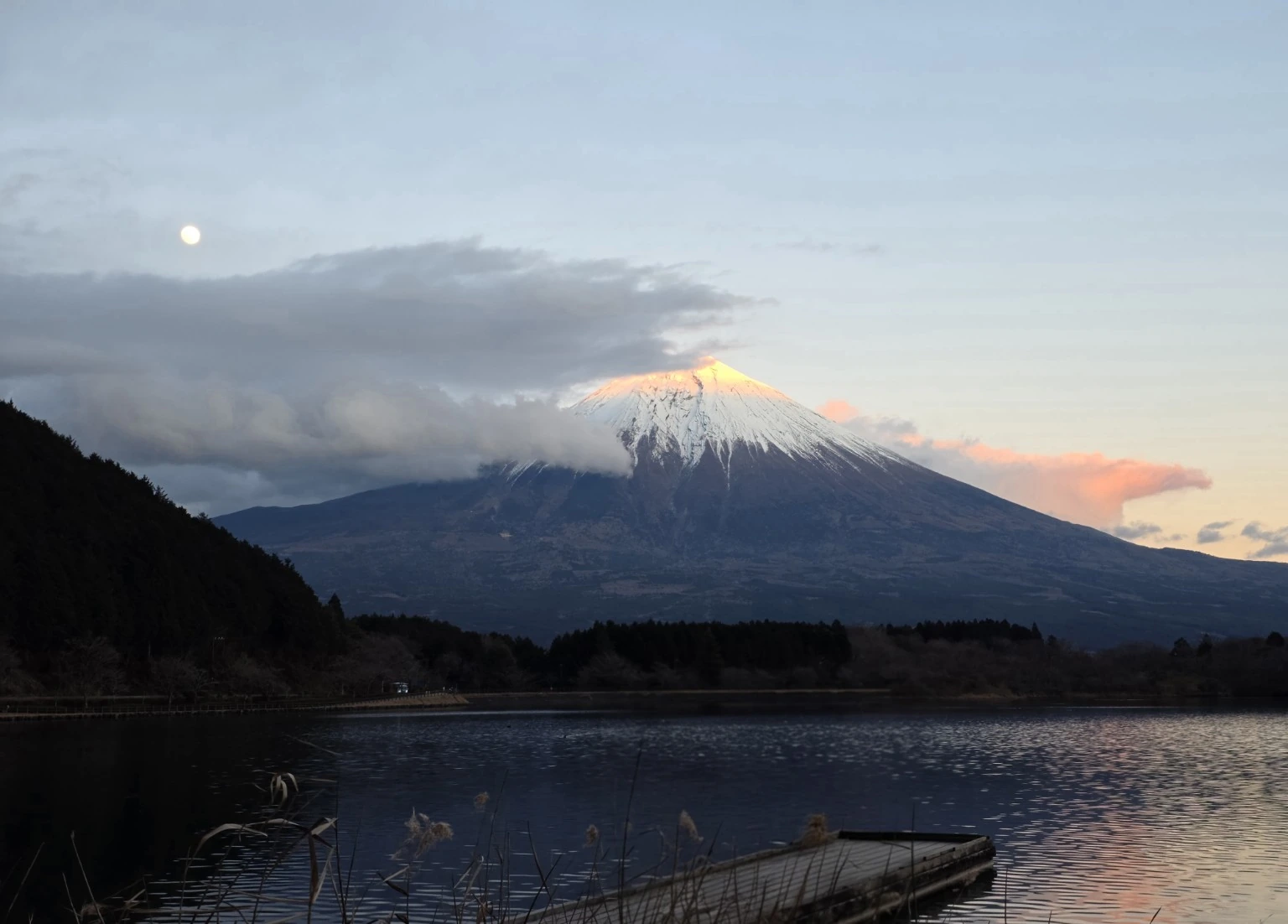
Fuji still rose across the calm water, with the moon hanging to the left. It was not the perfectly clear view we had become used to that day, but the changing clouds made us stay and watch for a while.
By the quiet lake
What I liked here was not only the view of Mount Fuji.
The water was relatively still, and the colors of the lake and sky changed slowly as the sun dropped. The mountain and the quiet lakeshore worked together rather than competing for attention.
According to the City of Fujinomiya, Lake Tanuki has a shoreline of about 3.3 kilometers. The tourism association also highlights the lake for sakasafuji — the reflected image of Mount Fuji that can appear on calm water. What we saw that evening was not a perfect mirror reflection, but the still surface gave the whole scene a softer, quieter feel.
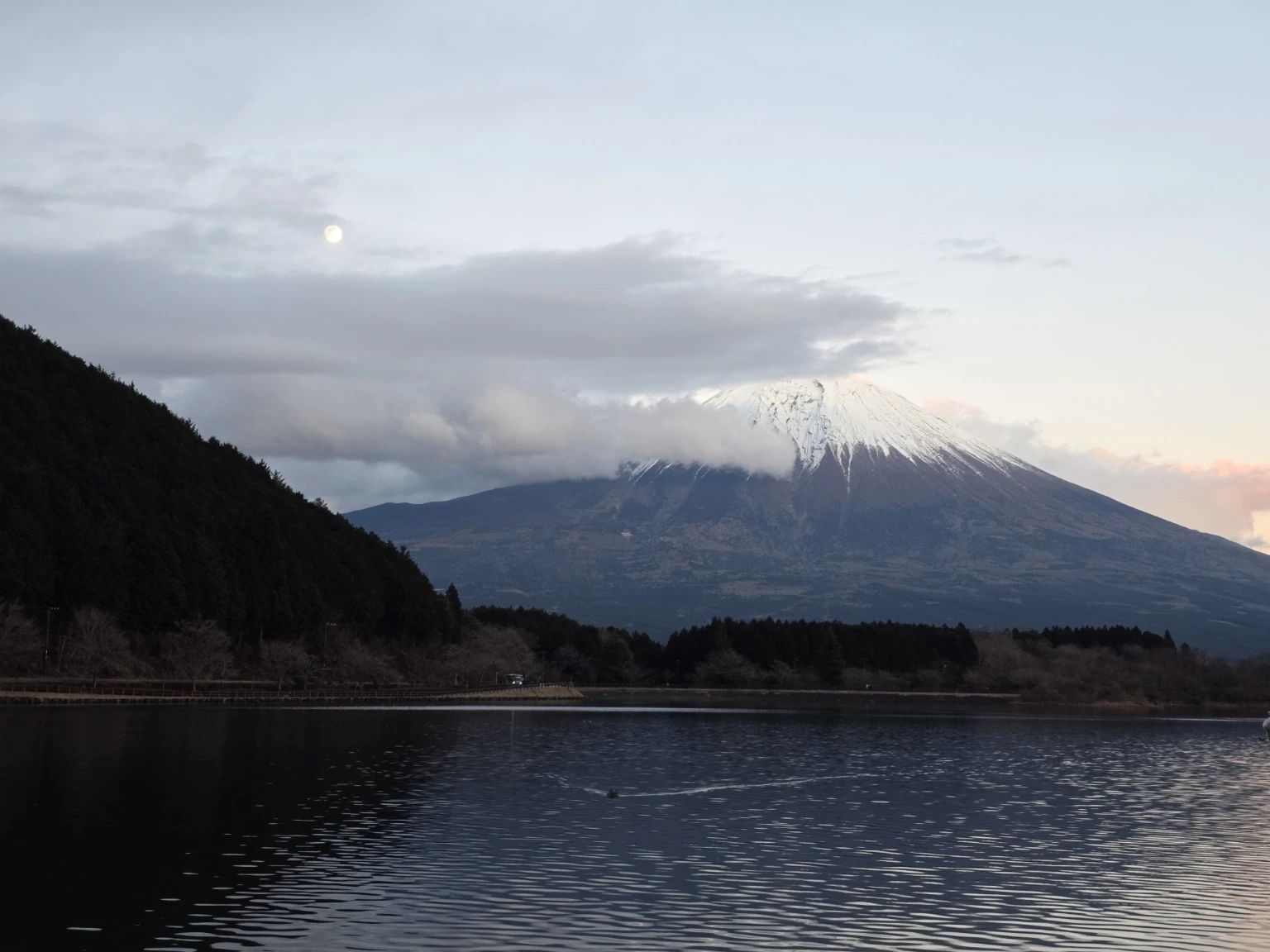
Fuji slipping into the clouds
The mountain looked different every few minutes.
One moment the upper slopes were visible; the next, a wide bank of cloud moved across the middle and toward the summit.
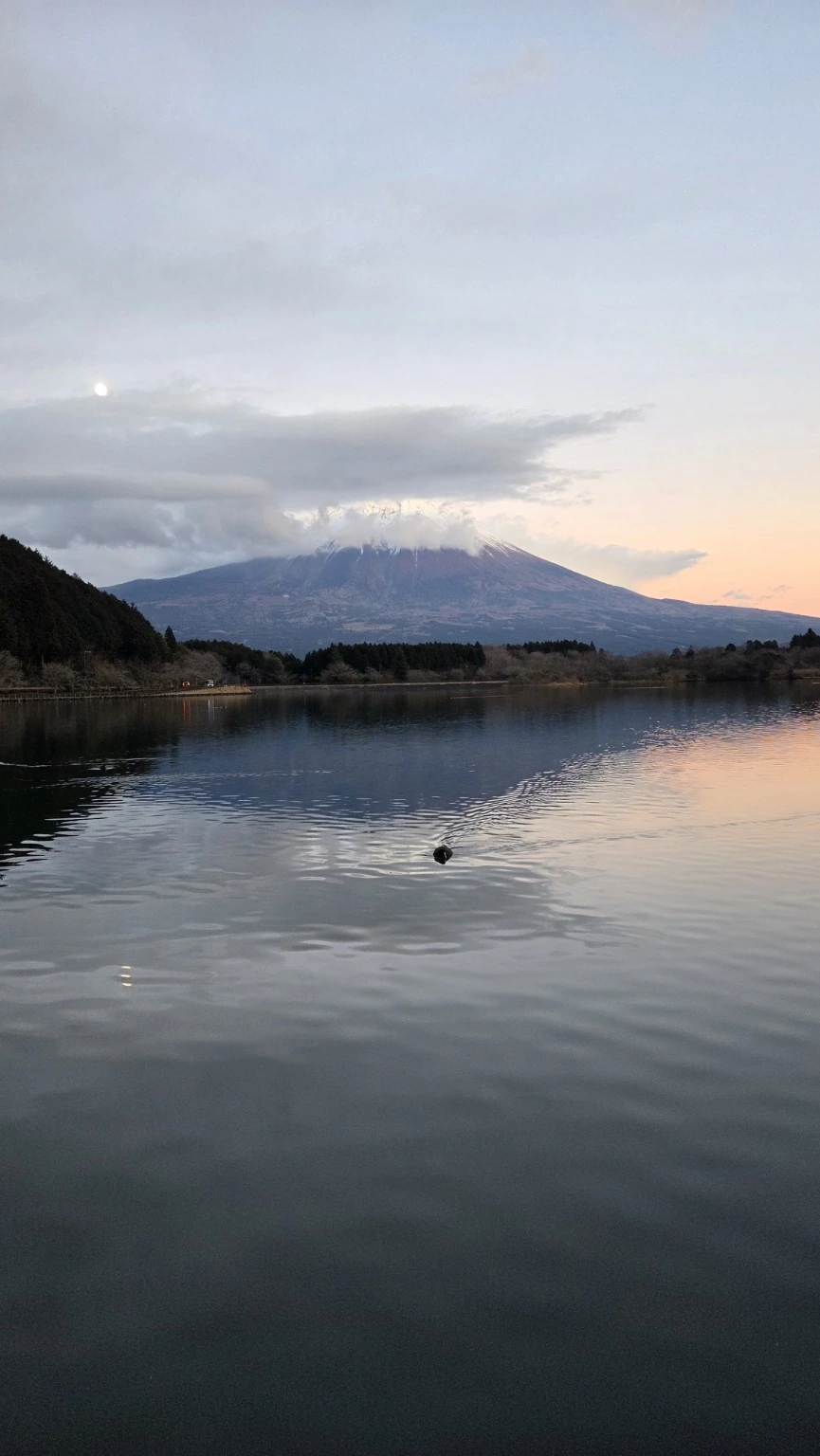
Travelers sometimes describe Mount Fuji as “shy” when it disappears into the clouds. It is not an official nickname, but that phrase made sense here.
We had been unusually fortunate on this trip, seeing Fuji clearly again and again. After a full day of sharp views, watching the mountain slowly vanish into the evening clouds made those earlier moments feel less automatic — and a little more lucky.
The last light on the water
As it grew later, I stopped looking only at Mount Fuji.
The mountain slipped farther behind the clouds, while warm sunset light remained on the opposite side of the lake. The orange glow stretched across the wide water as the surroundings became quieter.
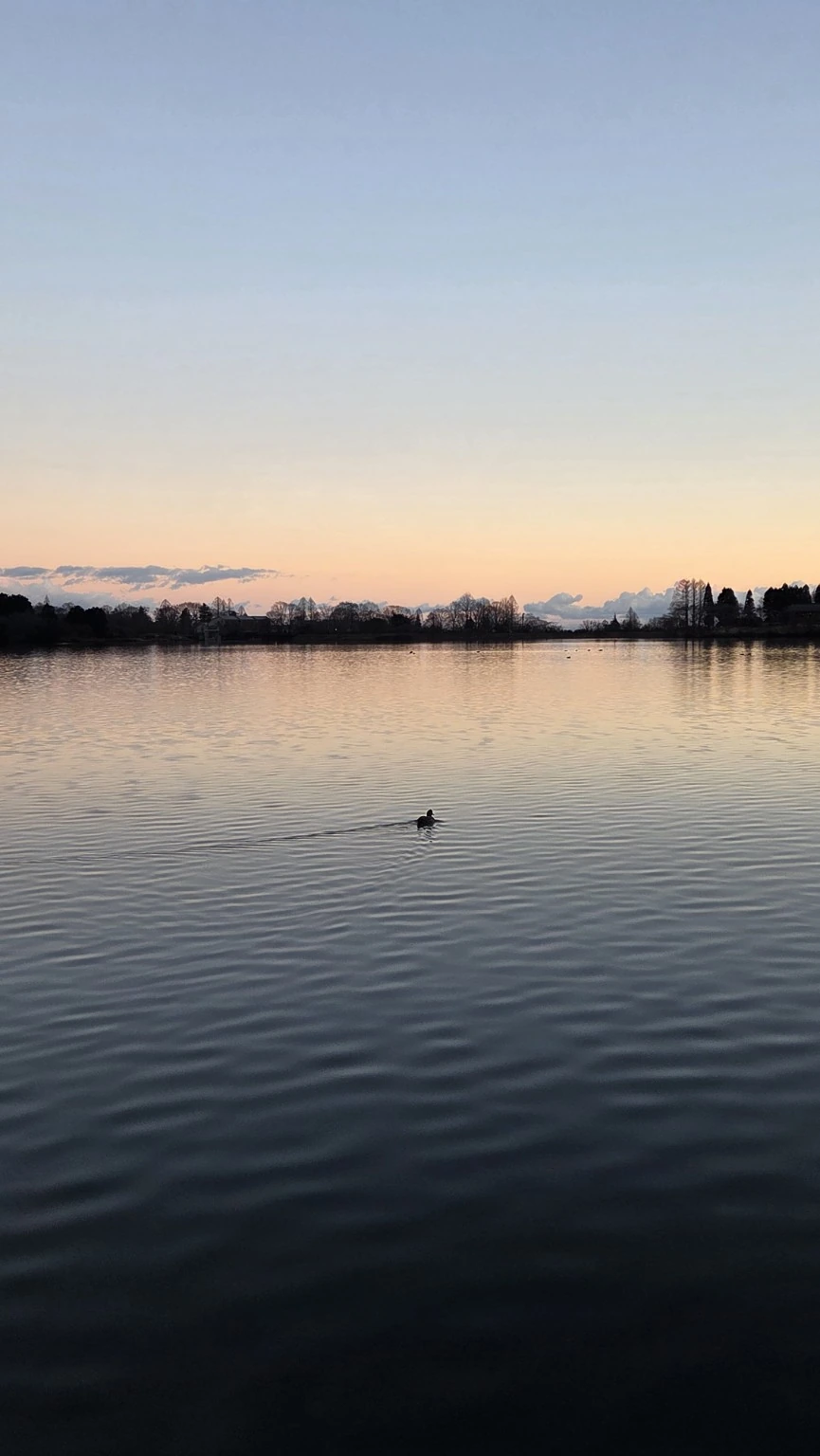
Ducks moved slowly near the shore, and the moon left a narrow reflection on the darkening water.
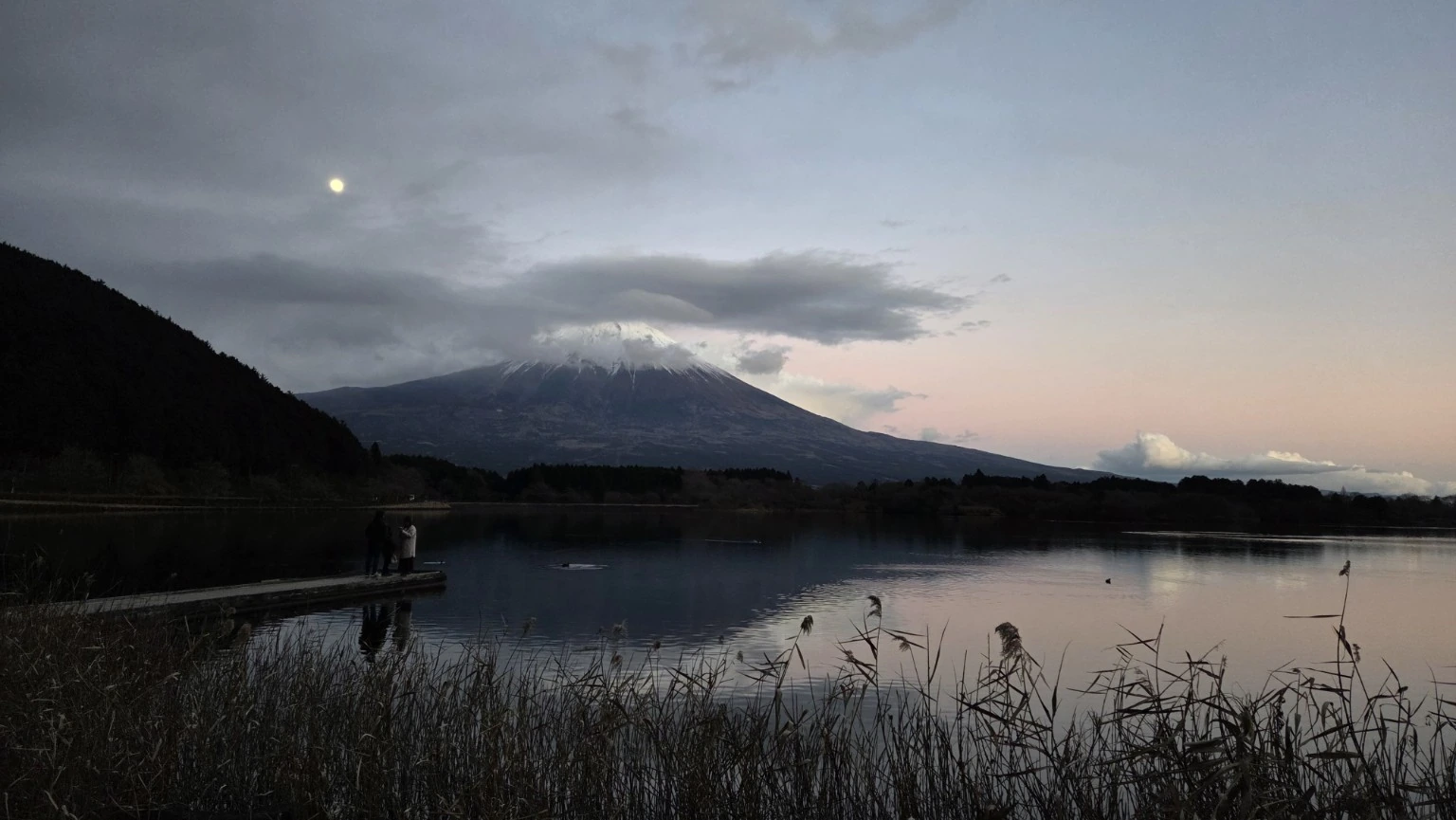
Instead of trying to fit in one more stop, we stayed by the water and watched the light fade. After a day spent seeing Mount Fuji in several different settings, Lake Tanuki felt like a natural place to finish.
Continue Exploring A Snowy Night at Shoji Lake HotelPRACTICAL INFO
Location
- Lake Tanuki Observation Deck (たぬき展望台), on the north side of Lake Tanuki
- Address: 2929-9 Inokashira, Fujinomiya, Shizuoka 418-0108, Japan
- The Kanto Regional Environment Office describes the observation deck as being reached by an uphill path beside the bungalow area on the north side of the lake.
Lake Tanuki
- The City of Fujinomiya lists the shoreline at about 3.3 km.
- The Fujinomiya City Tourism Association states that Lake Tanuki itself can be visited at any time.
- Official tourism information lists parking for about 40 cars on the north side and 200 on the south side; large vehicles are not allowed in those lots.
- On calm days, the lake is known for sakasafuji, the reflection of Mount Fuji on the water.
Diamond Fuji
- The City of Fujinomiya says Diamond Fuji can be seen around April 20 and August 20, for roughly a week around each period, when the sun rises near the summit.
- The tourism association also identifies Lake Tanuki as a well-known place to photograph “Double Diamond Fuji,” when the light is reflected on the lake as well.
Current lakeside-path restriction
- As of the Lake Tanuki Campground notice dated September 11, 2026, part of the lakeside loop between the north parking area and just before Fugaku Terrace is completely closed to pedestrians after heavy rain. Bicycles are also restricted until construction is complete.
- Conditions may change as restoration work progresses, so check the latest official notice before visiting.
Information checked Official City of Fujinomiya, Fujinomiya City Tourism Association, Kanto Regional Environment Office and Lake Tanuki Campground information checked on 2026-09-25.