On February 24, 2025, after picking up the rental car near Keflavík Airport, my first stop in Iceland was the Fagradalsfjall Volcano area.
The Reykjanes Peninsula had seen repeated volcanic activity, and part of me hoped I might be lucky enough to catch a glimpse of flowing lava somewhere in the distance. There was no active lava to see on my visit, but the hike became memorable for a different reason.
Starting from a wide, exposed parking area
The parking area felt more like a broad open lot than the entrance to a conventional attraction. As soon as I stepped out of the car, the dominant features were bare ground, dark ridges and an enormous sky.
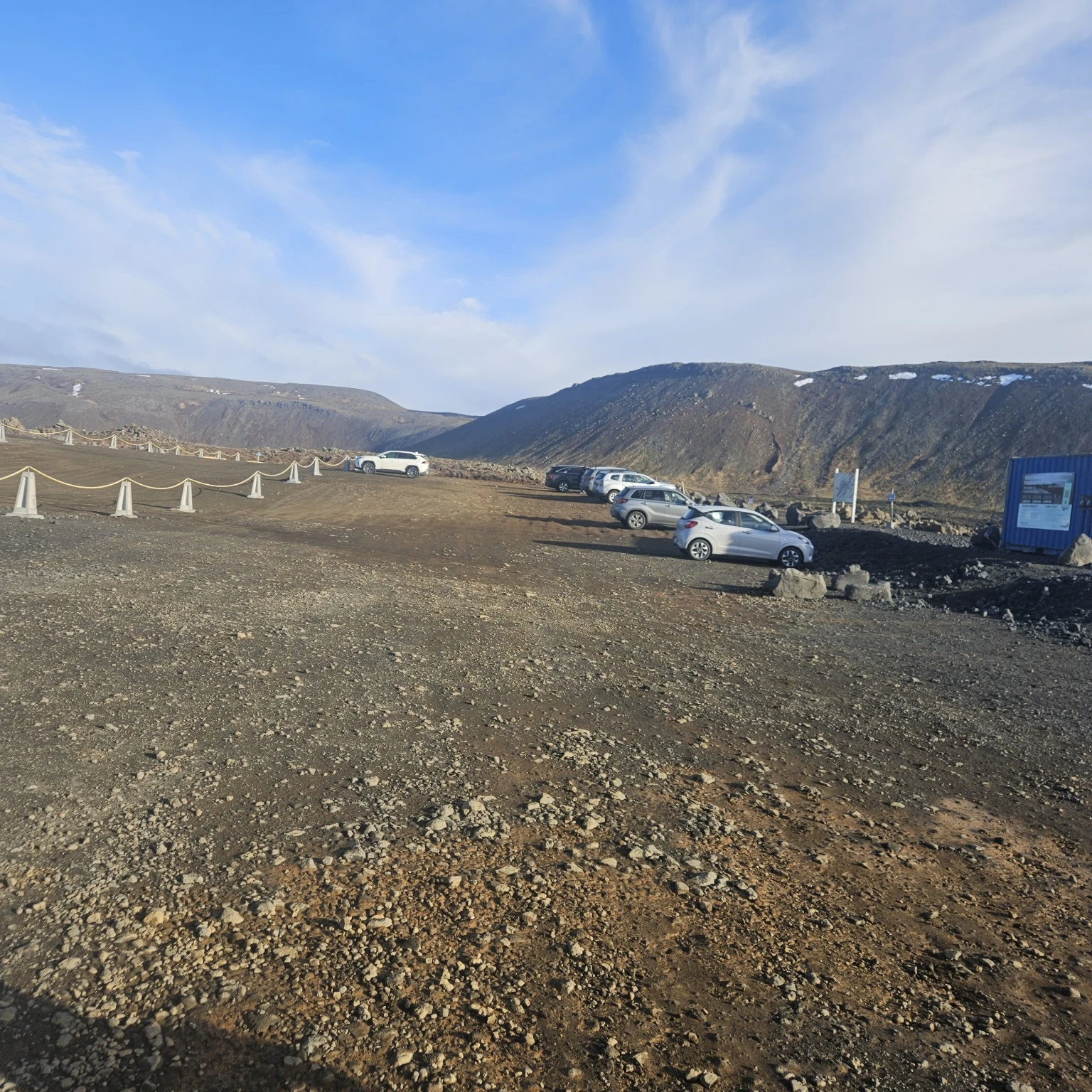
The wind was stronger than I expected. I put on goggles, hiking boots and winter layers, and took trekking poles along just in case. The sky was beautifully clear, but the wind made the temperature feel very different from what the sunshine suggested.
A large trail map showed several routes with different distances and estimated hiking times. Fagradalsfjall is not a single short path: different trails lead toward viewpoints and eruption landscapes formed in different years.
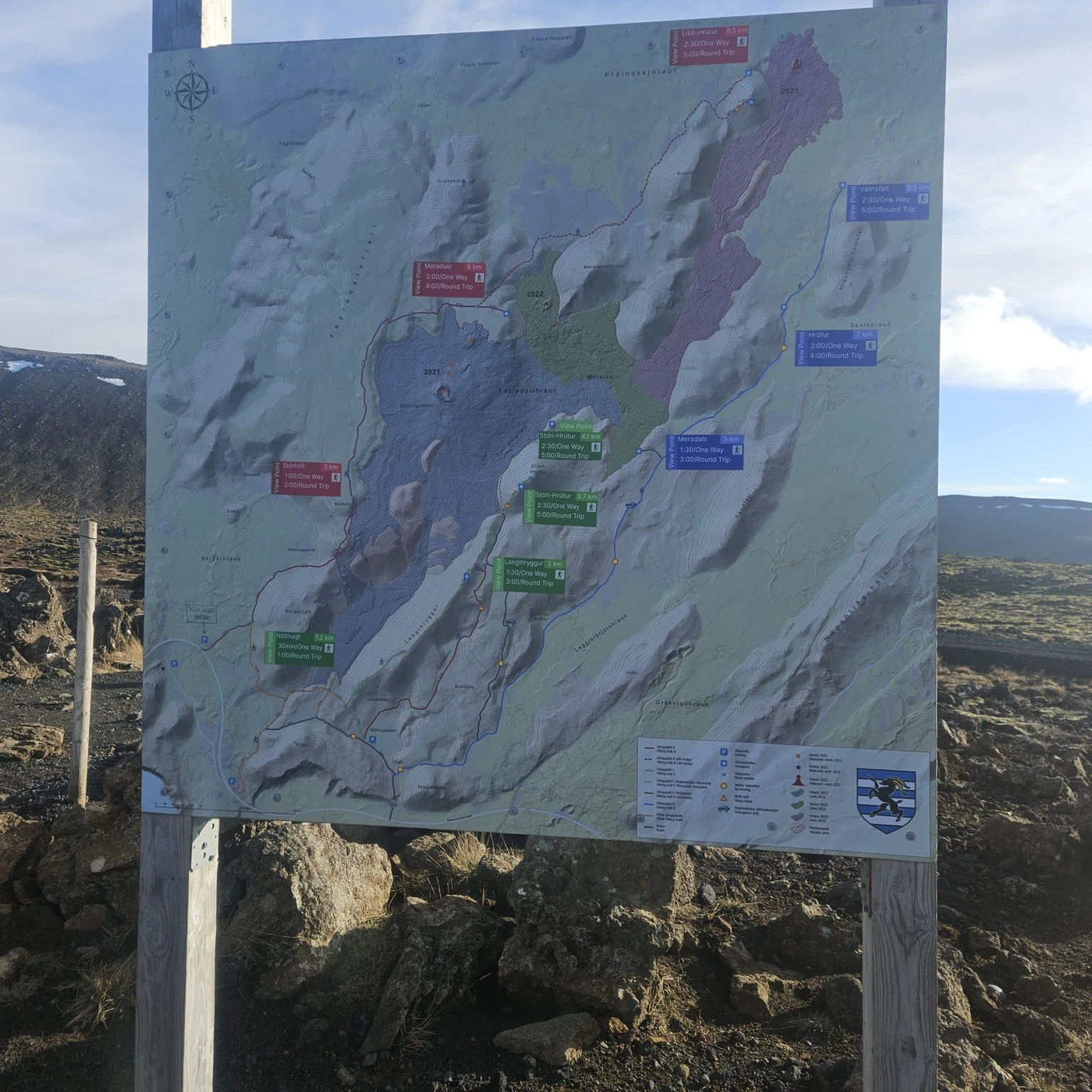
Official guidance describes the terrain as a mix of gravel, uneven ground, lava fields and steep hills. That matched my impression: the climb felt longer than I had expected when I first planned the stop.
The Reykjanes landscape opened up as I climbed
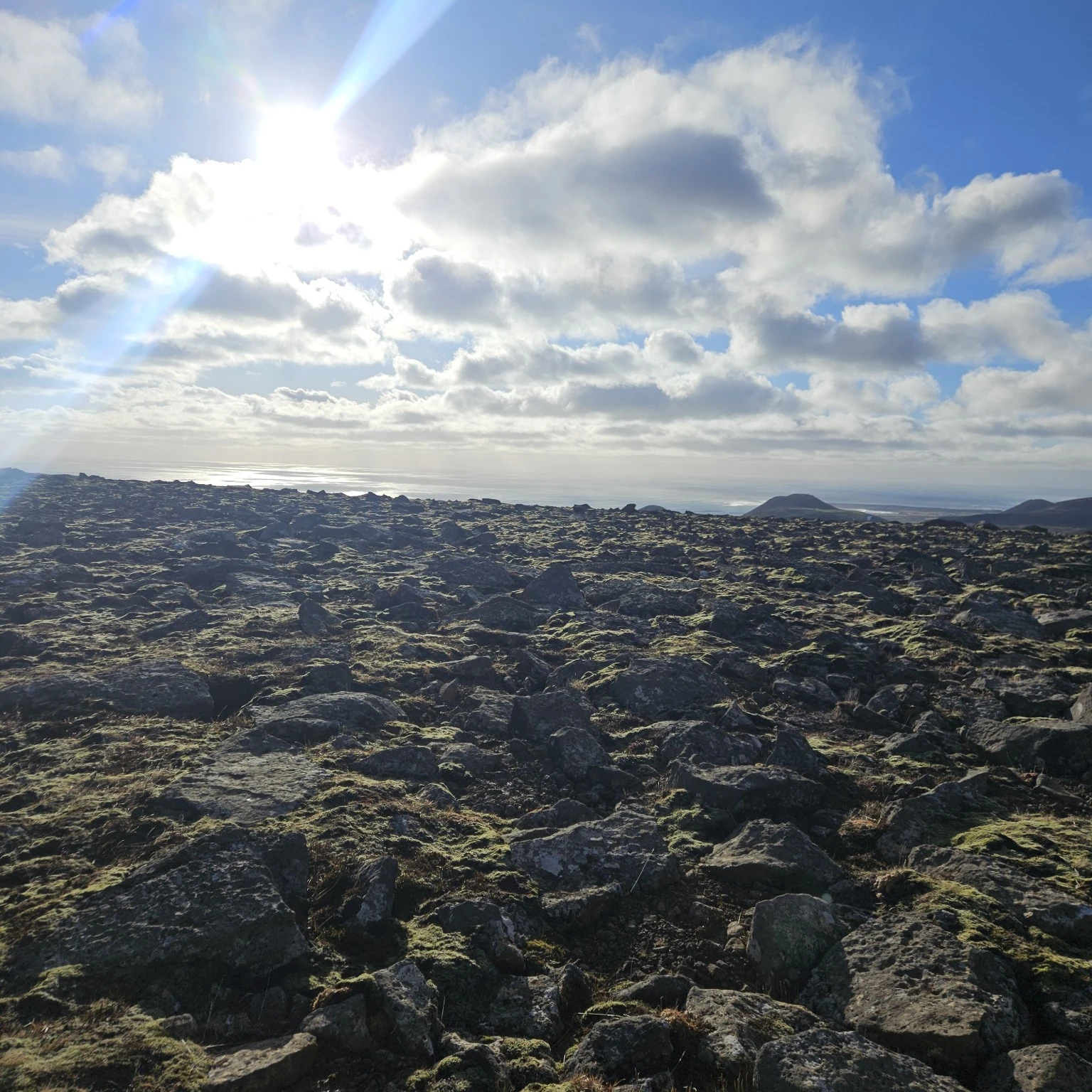
After gaining a little elevation, the view changed quickly. Low volcanic hills, dark plains and patches of green spread out beneath a bright blue winter sky.
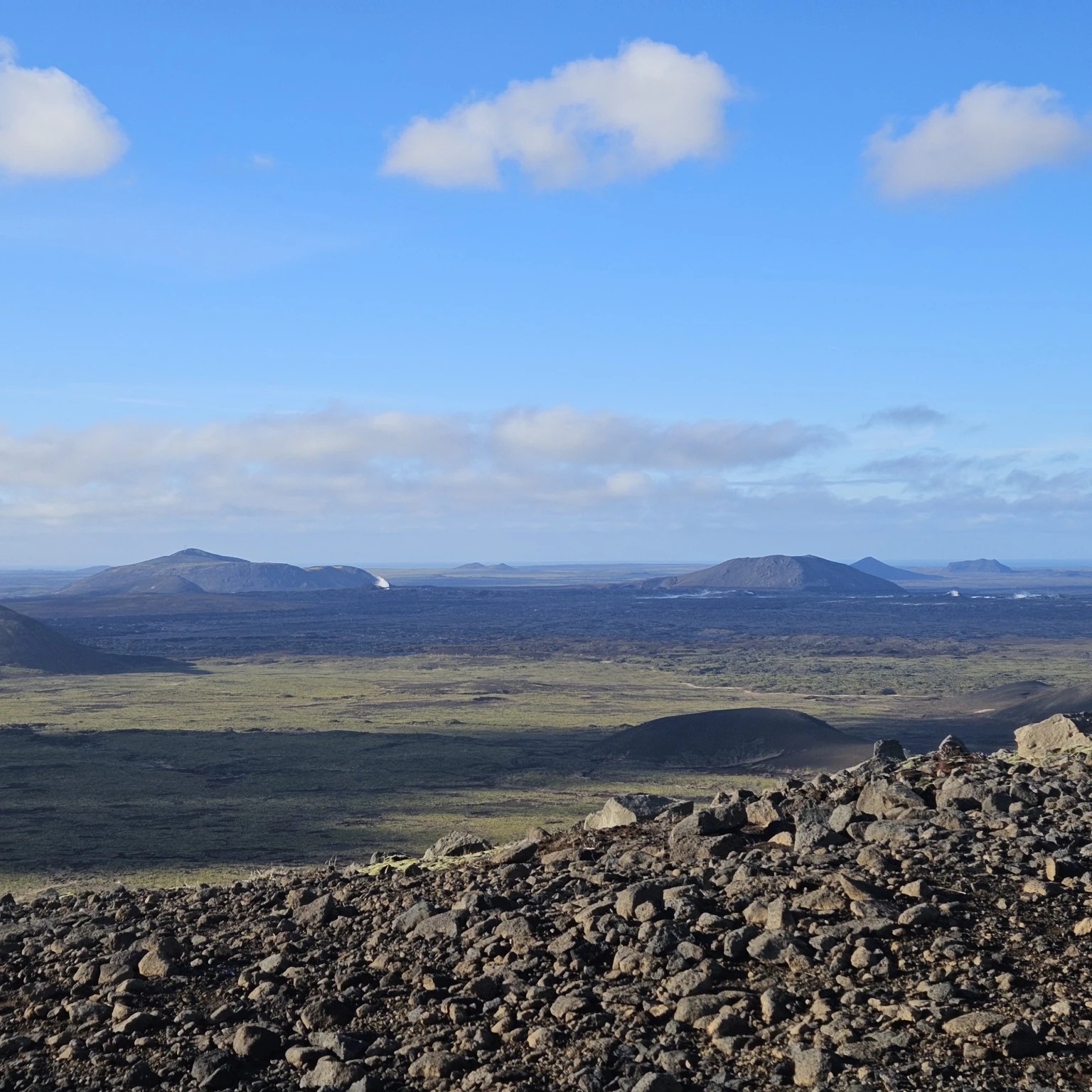
From a distance, much of the terrain looked like one continuous black surface. Up close, the textures were far more varied: rough dark ground, brown rock and broad channels that looked as if old lava had once filled them.
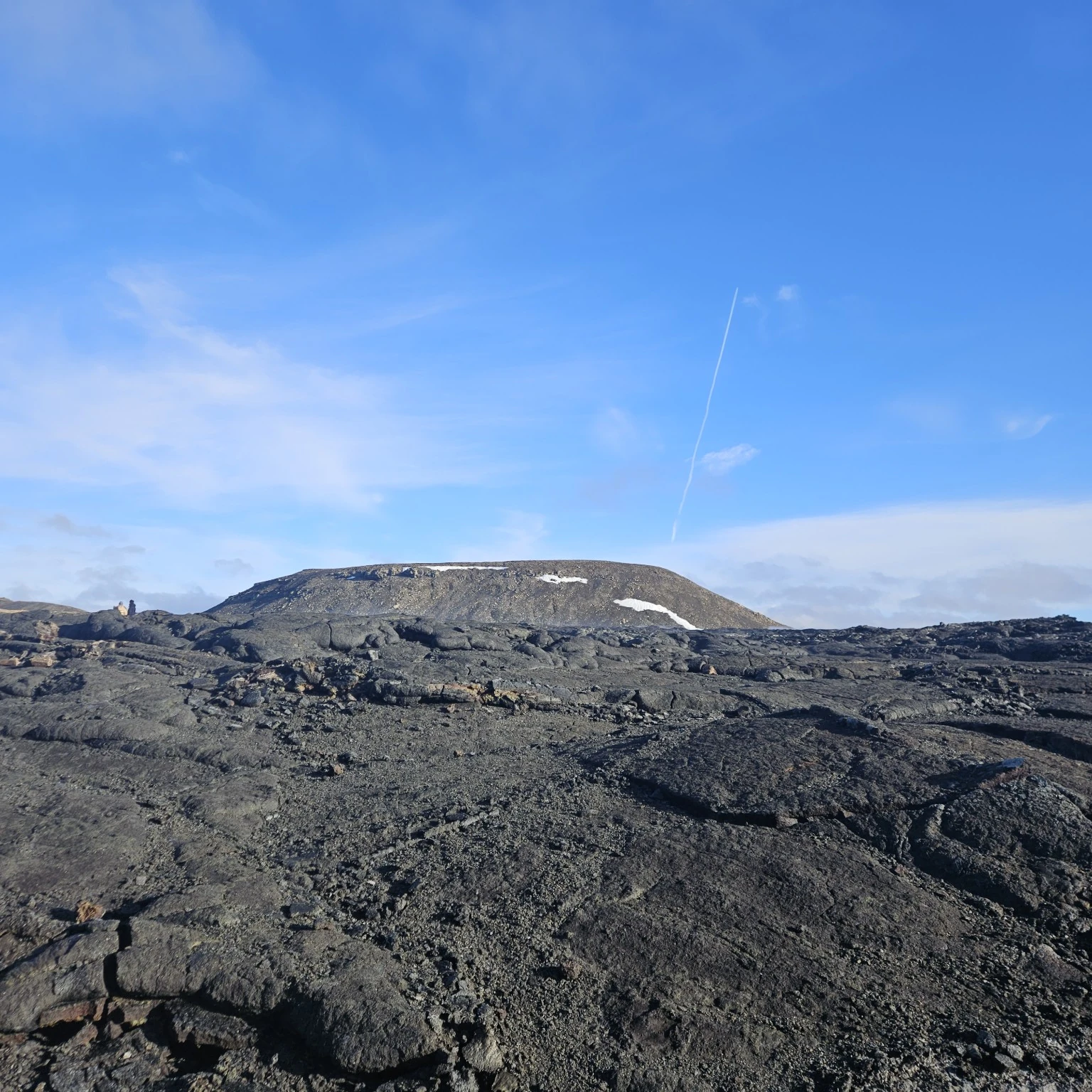
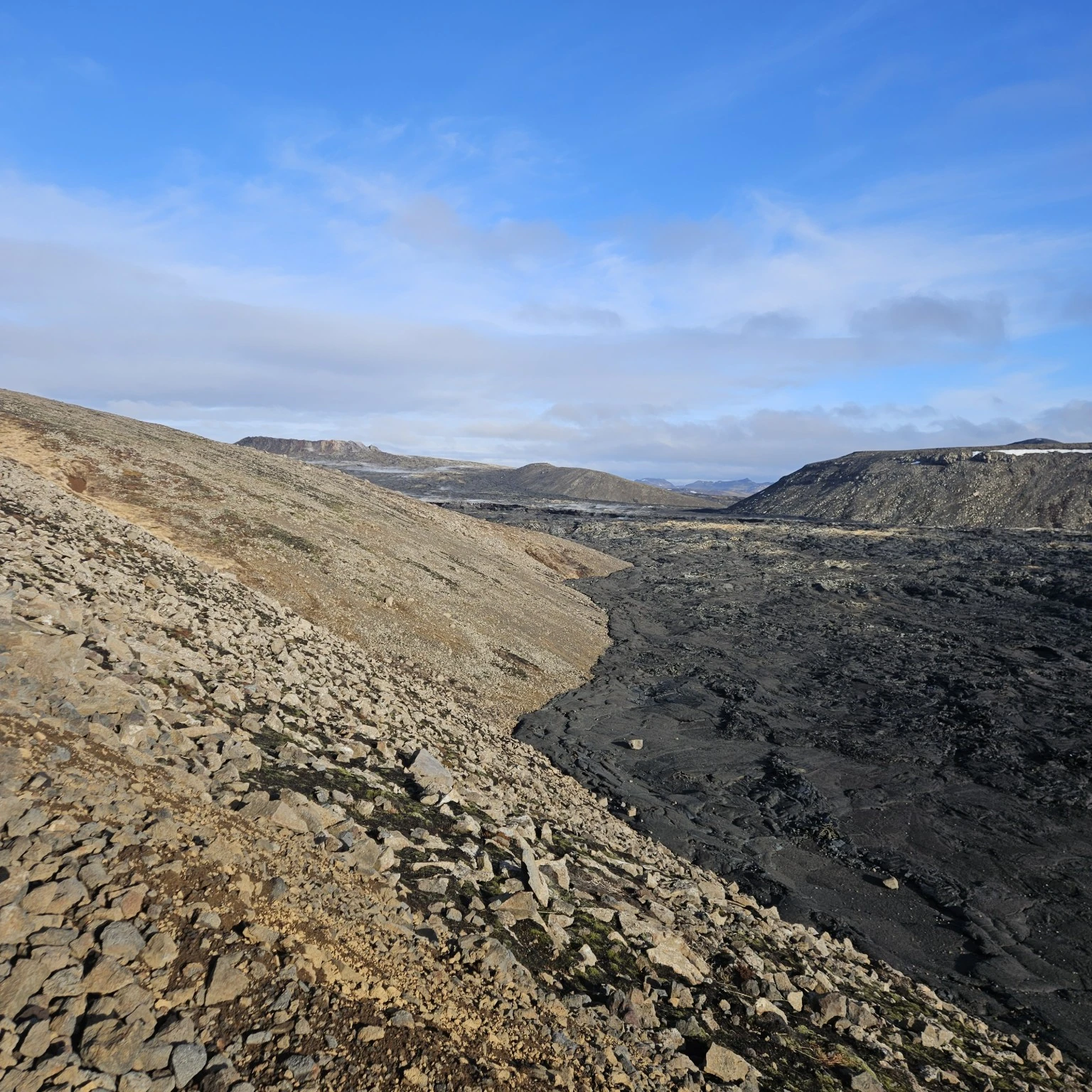
In other places, soft green moss covered the rocks. The contrast between black volcanic stone and bright moss was one of those small details that made the landscape feel unmistakably Icelandic.
Steam rising through the black ground
The strangest part came farther into the hike, where thin white steam appeared to rise from cracks across sections of dark ground.
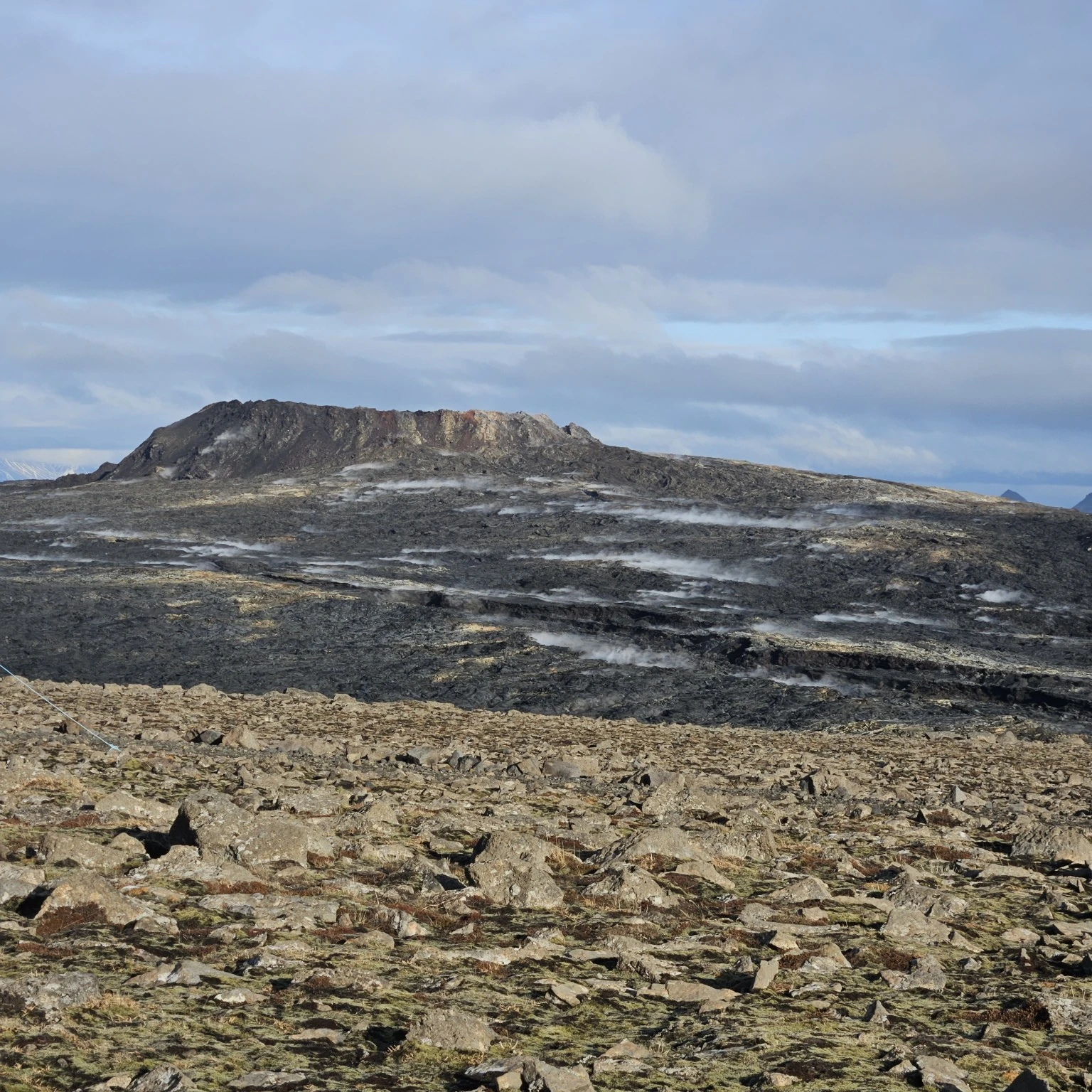
At the time, I could not tell whether the warmth came from geothermal activity, residual volcanic heat or something else. When I moved my hand close to one of the gaps, I could feel warm air rising. Looking back at the official safety guidance now, I would not repeat that: volcanic areas can contain hidden heat and invisible gases, so cracks and steaming ground are better observed from a safe distance and from marked routes.
I never saw the red flow of lava I had imagined before the trip. Still, walking through hardened black ground, steam and moss was strange enough to make the hike worthwhile on its own.
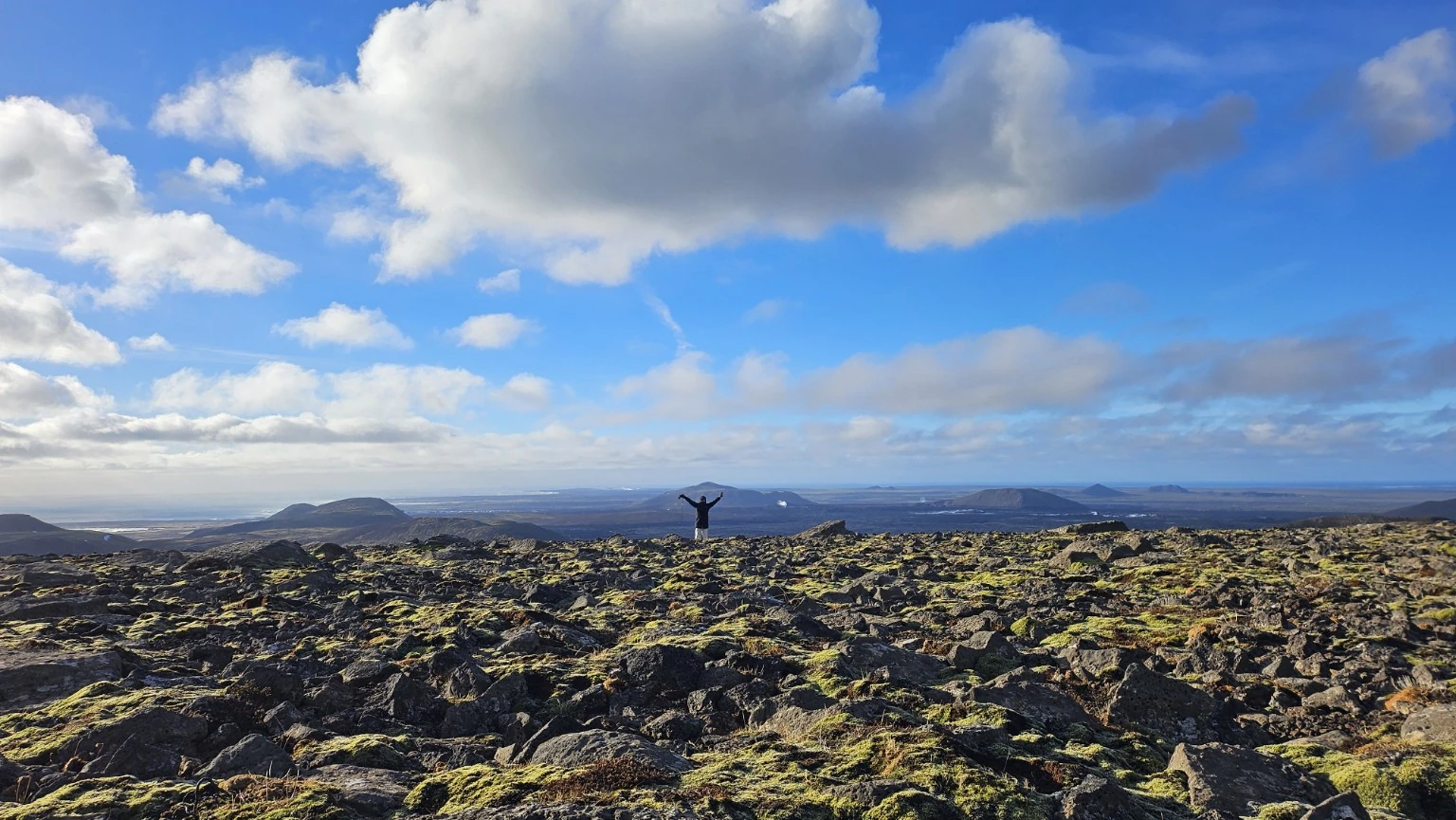
It was a strong first stop in Iceland. Before seeing waterfalls or glaciers, I had already spent a few hours walking over a landscape shaped by volcanic activity and feeling how exposed, windy and alive the ground could seem.
Continue Exploring Þingvellir National Park: My First Icelandic Waterfall at the End of a Wide Winter WalkPRACTICAL INFO
- Place: Fagradalsfjall Volcano, Reykjanes Peninsula, Iceland
- Area: Near Grindavík on the Reykjanes Peninsula
- Visited: 2025-02-24
- Parking: Current official guidance lists P1 and P2 parking areas. The fee is currently 1,000 ISK for 24 hours; check the latest payment and access information before visiting.
- Trails: Several routes lead to different viewpoints and eruption areas. Official guidance describes challenging sections with gravel, uneven ground, lava fields and steep hills.
- Winter gear: Windproof and waterproof outer layers, insulation, gloves, headwear and warm waterproof hiking footwear are recommended. Hiking poles can help on uneven ground.
- Water and snacks: Official winter hiking guidance recommends carrying enough water for the duration of the hike along with energy-giving snacks.
- Toilets: Official information says portable toilets are usually available near P1 and P2, but availability can change. Do not rely on finding facilities once you are out on the trail.
- Volcanic terrain: Fresh lava can remain dangerously hot beneath a solid-looking crust. Official guidance says never to walk on lava and to stay on marked routes.
- Gas and closures: Check SafeTravel and local official updates for volcanic activity, gas forecasts, weather and trail access before setting out. Access can change or close with little notice.
- Info checked: 2026-10-02