February 26, 2025.
Sólheimajökull was the first glacier I had ever seen up close.
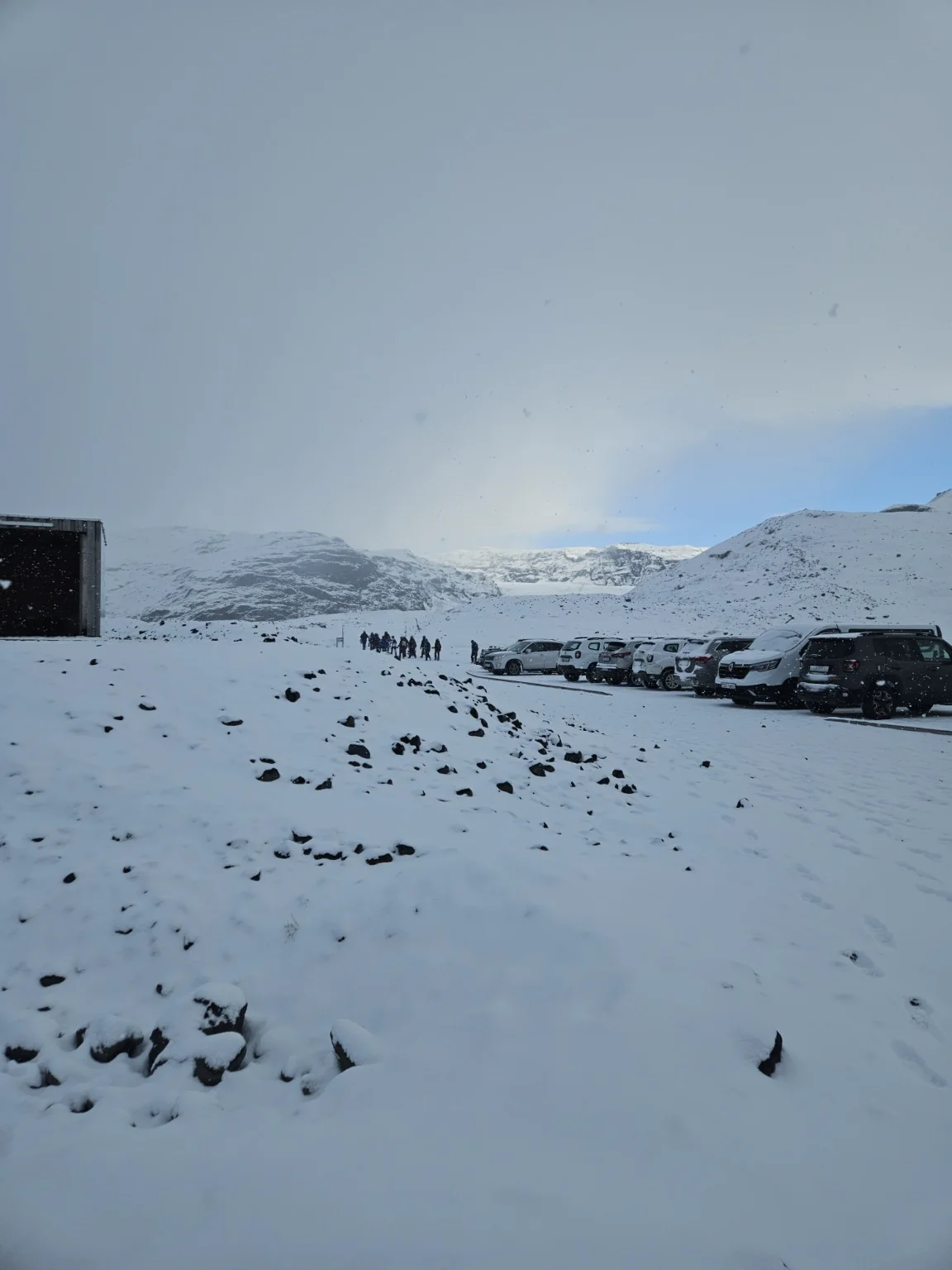
We left the Ring Road and followed Road 221 along a winding approach. The landscape kept getting whiter until a wide, snow-covered parking area appeared at the end.
I had heard before the trip that glaciers were not places to enter without a guide, so before unloading our gear I went to the information point to ask.
The guidance I received on the day in February 2025 was clear: walking onto the glacier itself required a guided tour, while the ordinary approach trail and viewing area could be walked independently within the designated route.
We went back to the car, put traction on our boots and took trekking poles.
The snowy walk stayed with me too
The glacier did not appear immediately from the parking area.
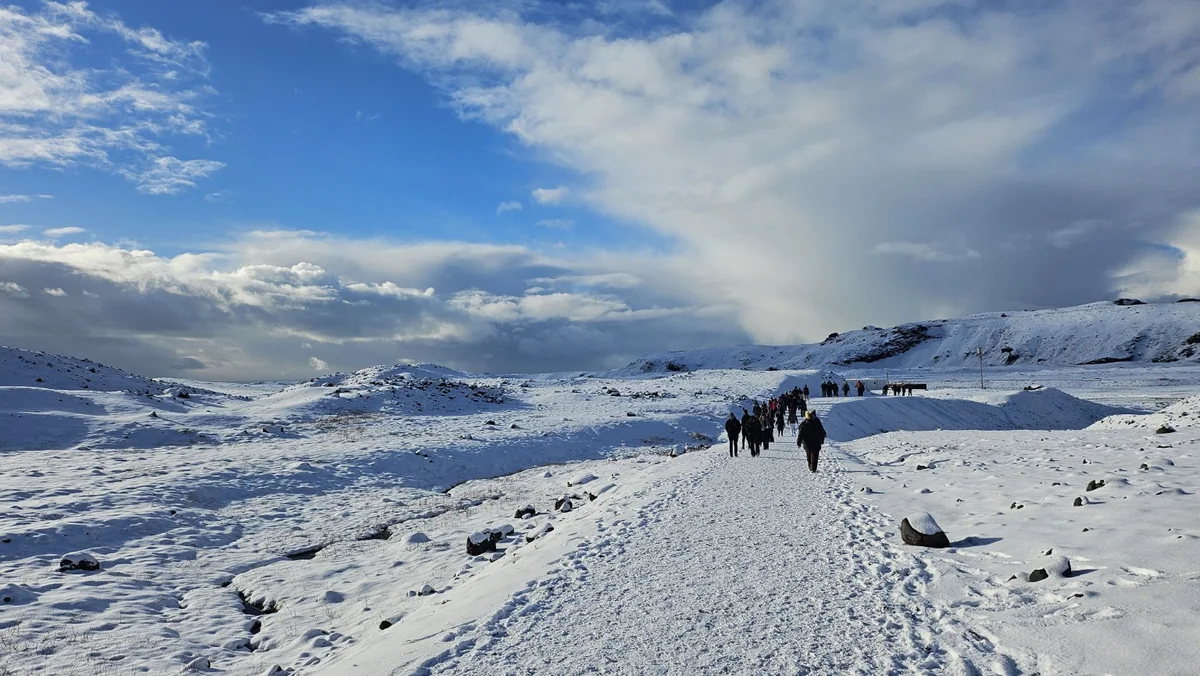
We walked across the snow for a while — around twenty minutes by my memory. The route was not especially steep, but snow covered the ground and a line of footprints led toward the glacier.
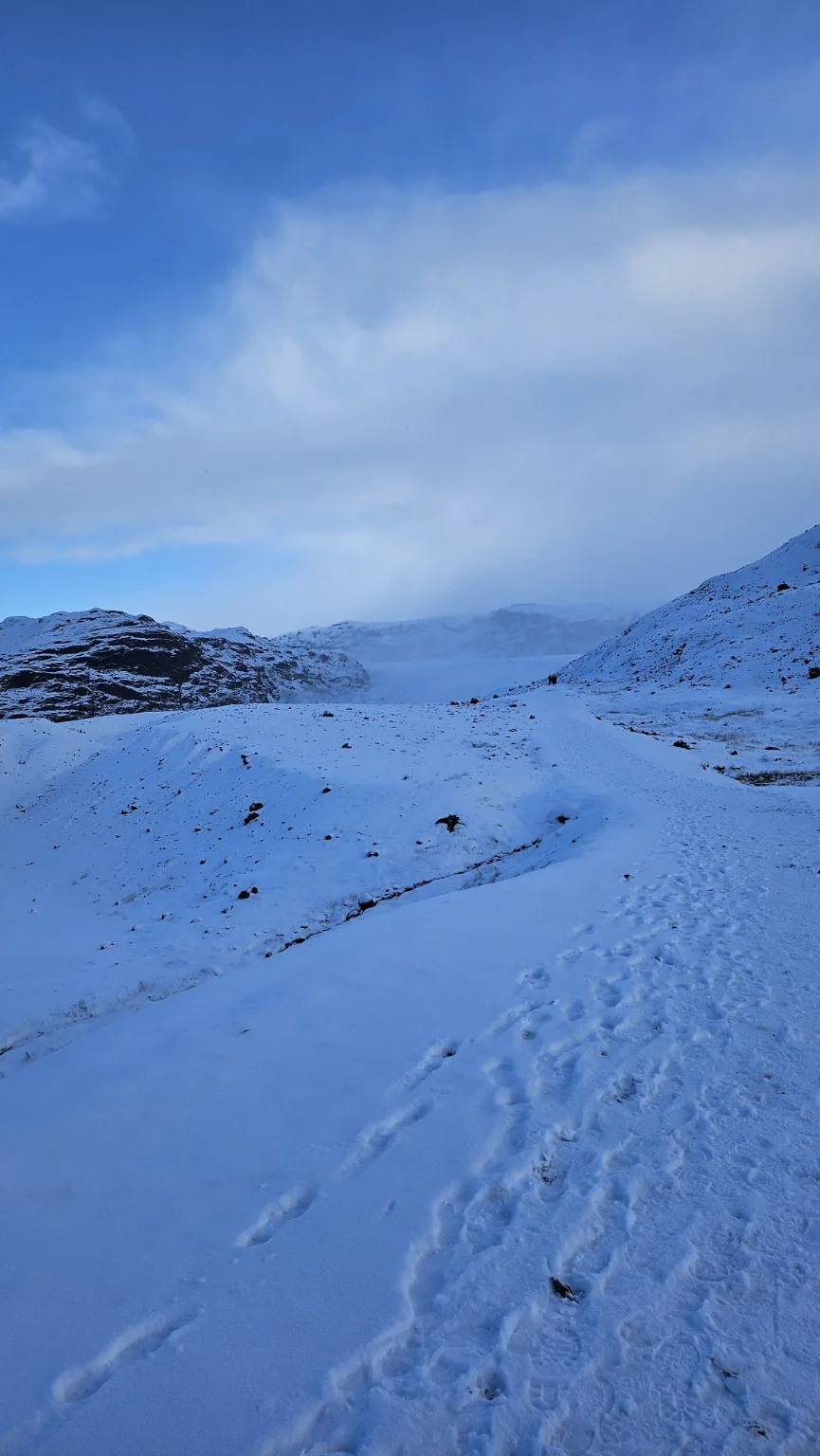
Meltwater still moved between the snow and ice in places. I had expected the whole landscape to feel frozen solid, so seeing flowing water through the winter terrain was memorable.
Traction and poles helped in the conditions I experienced, but equipment comes after the more important question: what are the road, weather and on-site conditions today?
Related Travel Tips Essential Iceland travel apps · Ring Road weather, roads and parkingThe water beside the trail was a glacial lagoon
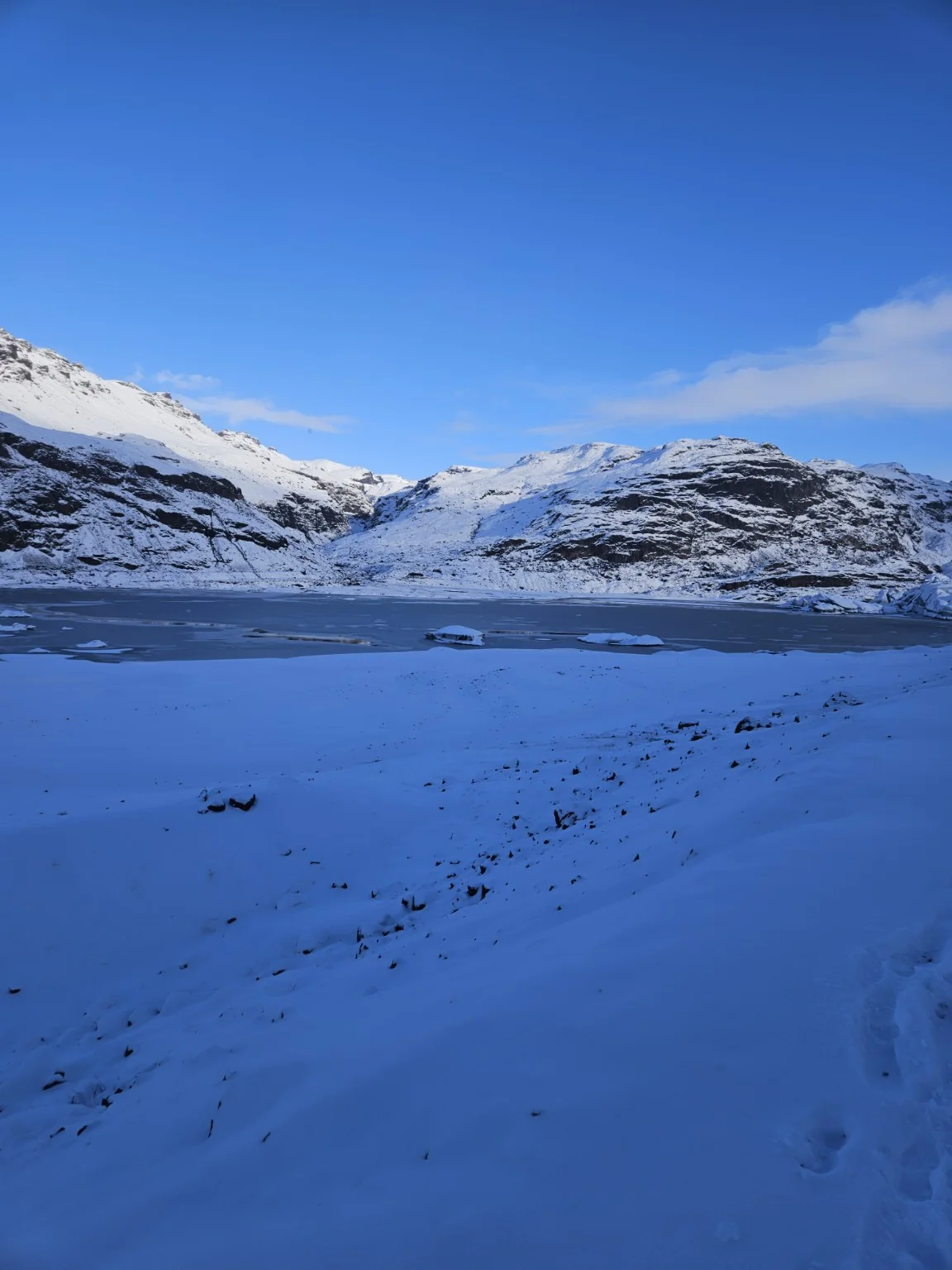
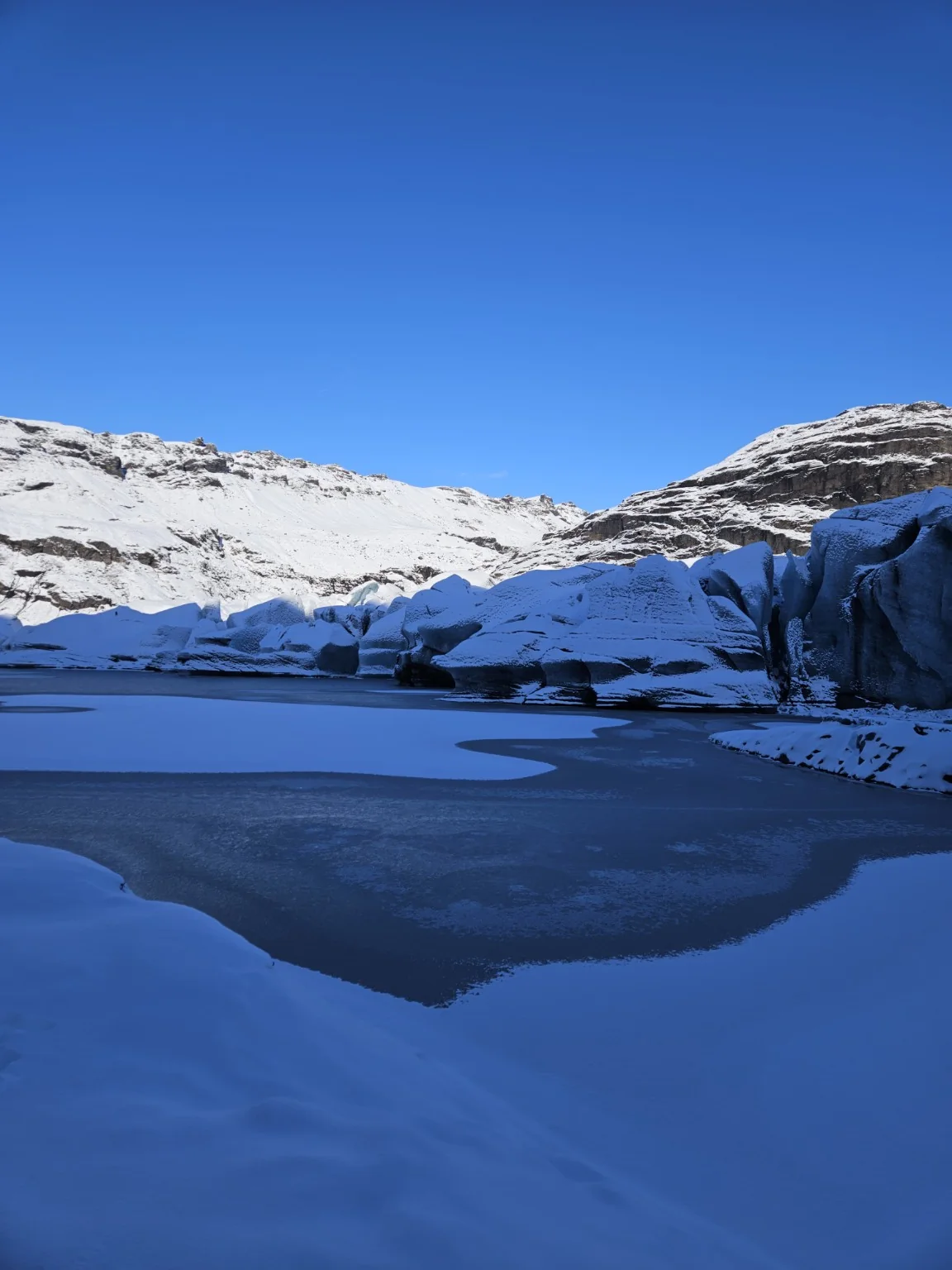
A large body of water appeared to the left as we walked.
At the time I was not sure whether I was looking at the sea or a lake. Checking the official geology information later answered it: this was the proglacial lagoon in front of Sólheimajökull.
Katla UNESCO Global Geopark explains that the lagoon began forming in 2011 and has continued to grow as the glacier retreats. Pieces of ice that had broken away from the glacier were visible around the water as well.
Seeing a glacier for the first time
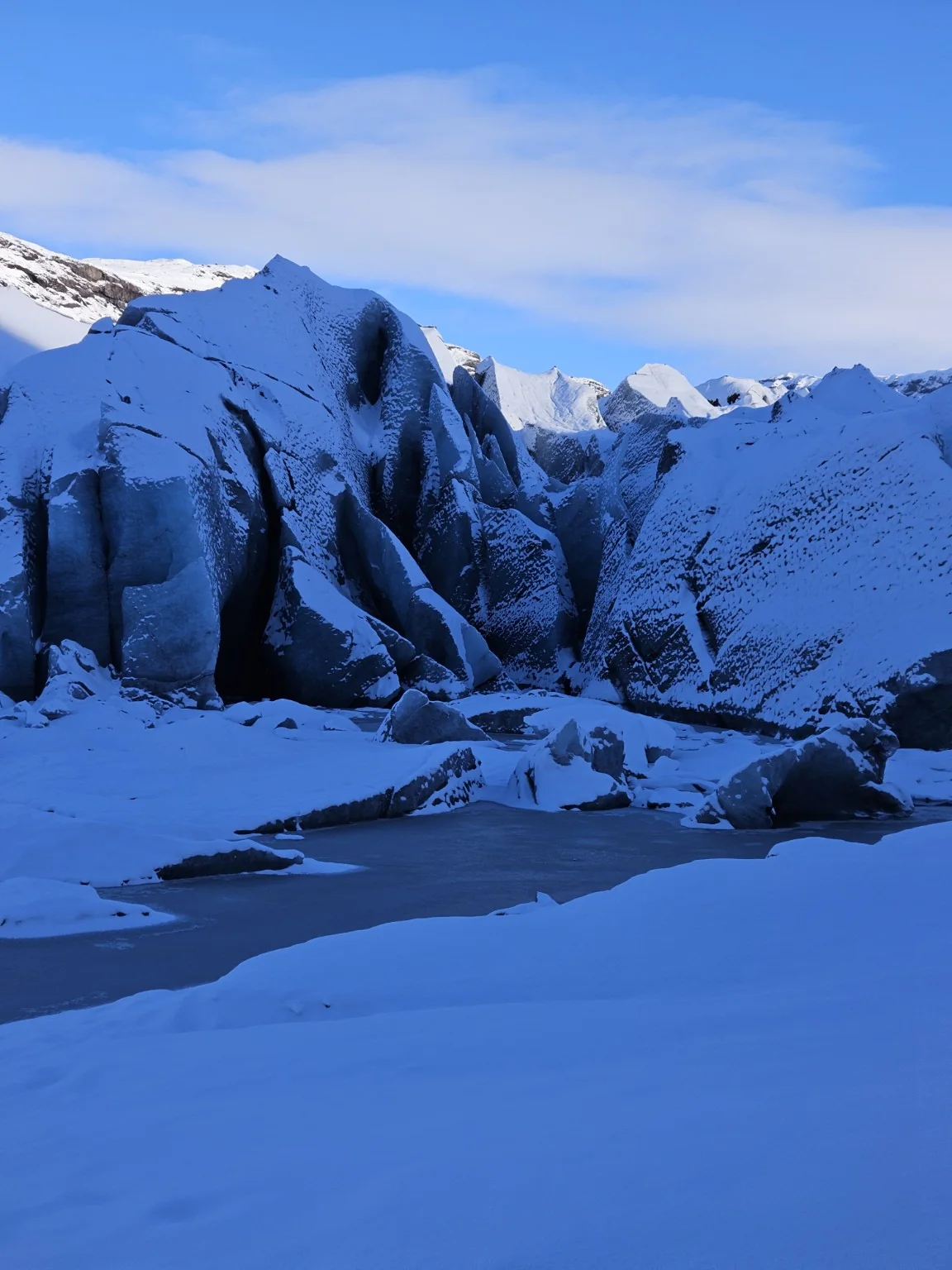
Then the huge mass of ice I had only known from photographs appeared in the actual landscape.
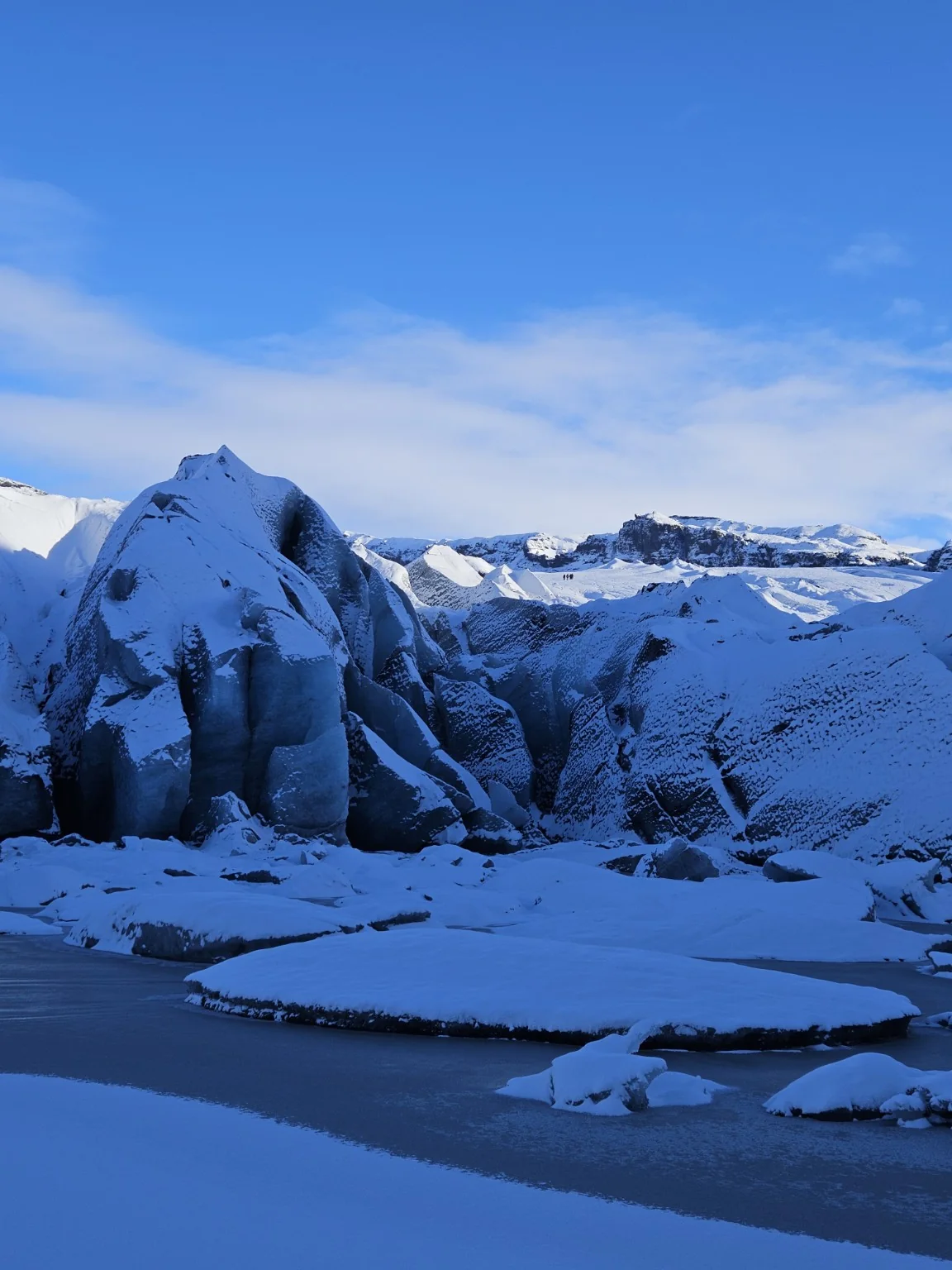
Most of the ice was in shadow when I arrived. I remember thinking how bright it might look if direct sunlight reached the surface.
Even in shade it was striking. Blue ice, white snow and dark bands of volcanic material overlapped, and the sense of scale changed completely as I got closer.
The photographs never quite captured how large the ice felt in front of me.
In 2025 there were places along the approach where the ice seemed close enough to touch. I could see the blue underside and rough texture at the glacier margin, with smaller pieces of ice nearby.
I still remember that my first glacier was Sólheimajökull under a layer of winter snow.
The people walking onto the glacier
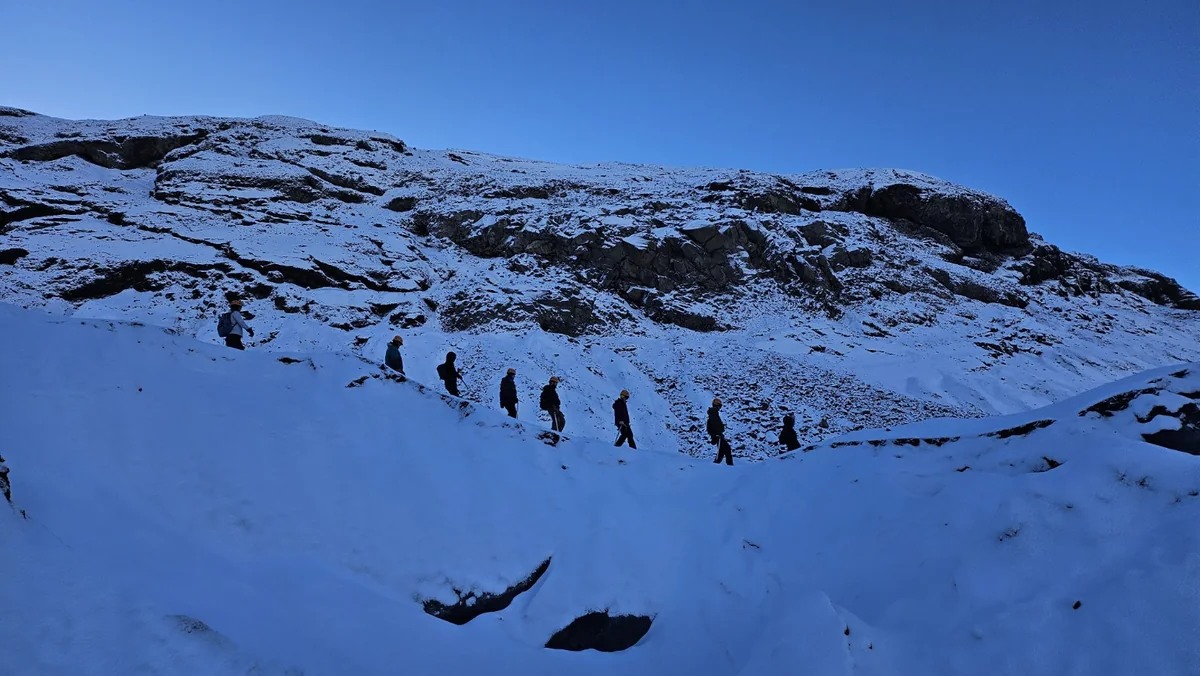
We did not book a guided glacier hike.
Nearby, however, large groups were putting on helmets and listening to safety instructions. Watching the equipment checks and organized groups made the difference visible: the ordinary approach trail we had used and actually stepping onto the glacier were two very different activities.
Katla UNESCO Global Geopark explicitly advises visitors never to go onto a glacier without an experienced local guide and proper glacier-hiking safety equipment.
Looking at a glacier from the approach trail and walking on the ice should not be treated as the same activity.
The route I walked in 2025 is not a promise about today
This is the most important practical update to add to my original experience.
I visited in February 2025 and, after asking on site, followed the ordinary approach route toward the glacier margin.
Sólheimajökull changes quickly. In July 2026, the Icelandic Meteorological Office warned of unstable ice, newly formed glacial lagoons and rockfall hazards near the glacier terminus. The ice ridge that had provided access toward the glacier had also thinned and become unstable.
That means the photographs in this story should not be used as evidence that the same points are safely reachable today.
Anyone visiting now should check SafeTravel, the Icelandic Meteorological Office, Traffic Info and all on-site restrictions before approaching the glacier, and should stay away from unstable ice or closed areas.
The moment the real Ring Road seemed to begin
I kept looking back at the landscape on the walk toward the parking area.
Even after the Golden Circle, I had the feeling that I had seen maybe ten percent of Iceland.
I had loved those places too, but seeing a huge glacier here made me think, this is where the real Ring Road — and the Iceland I had imagined — is beginning.
That was a big feeling to take away from what was, on paper, a fairly simple walk.
Sólheimajökull became the place where I saw a glacier for the first time and where the mood of the trip seemed to change completely.
Continue Exploring Skógafoss, a Rainbow in the SnowPRACTICAL INFO
- Place: Sólheimajökull
- Area: South Iceland · Destination Hub: South Coast
- Visited: 2025-02-26
- Road: Turn from Route 1 onto Road 221 (Sólheimajökulsvegur).
- Glacier: An outlet glacier descending from Mýrdalsjökull.
- Glacial lagoon: The proglacial lagoon began forming in 2011 and has grown as the glacier has retreated, according to Katla Geopark.
- Parking: Parka currently operates paid parking with electronic licence-plate monitoring. The parking area is open 24 hours, overnight stays are prohibited, and the current tariff should be checked at the time of the visit.
- Ordinary approach: Official tourism information describes a trail from the parking area toward the glacier, but conditions at the glacier margin can change rapidly; current safety guidance and on-site restrictions take priority.
- Walking on the glacier: Do not step onto the glacier without an experienced guide and proper glacier-hiking safety equipment.
- Current safety: In July 2026 the Icelandic Meteorological Office warned of unstable ice, glacial-lagoon and rockfall hazards near the terminus. Recheck the latest status on the day of your visit.
- Winter gear: I used traction and trekking poles in the conditions I encountered. What is appropriate depends on current snow, ice and local guidance.
- Information checked: 2026-10-07