On February 26, 2025, we headed for Reynisfjara on Iceland’s South Coast. I had been looking forward to my first black-sand beach, but choosing where to park came first.
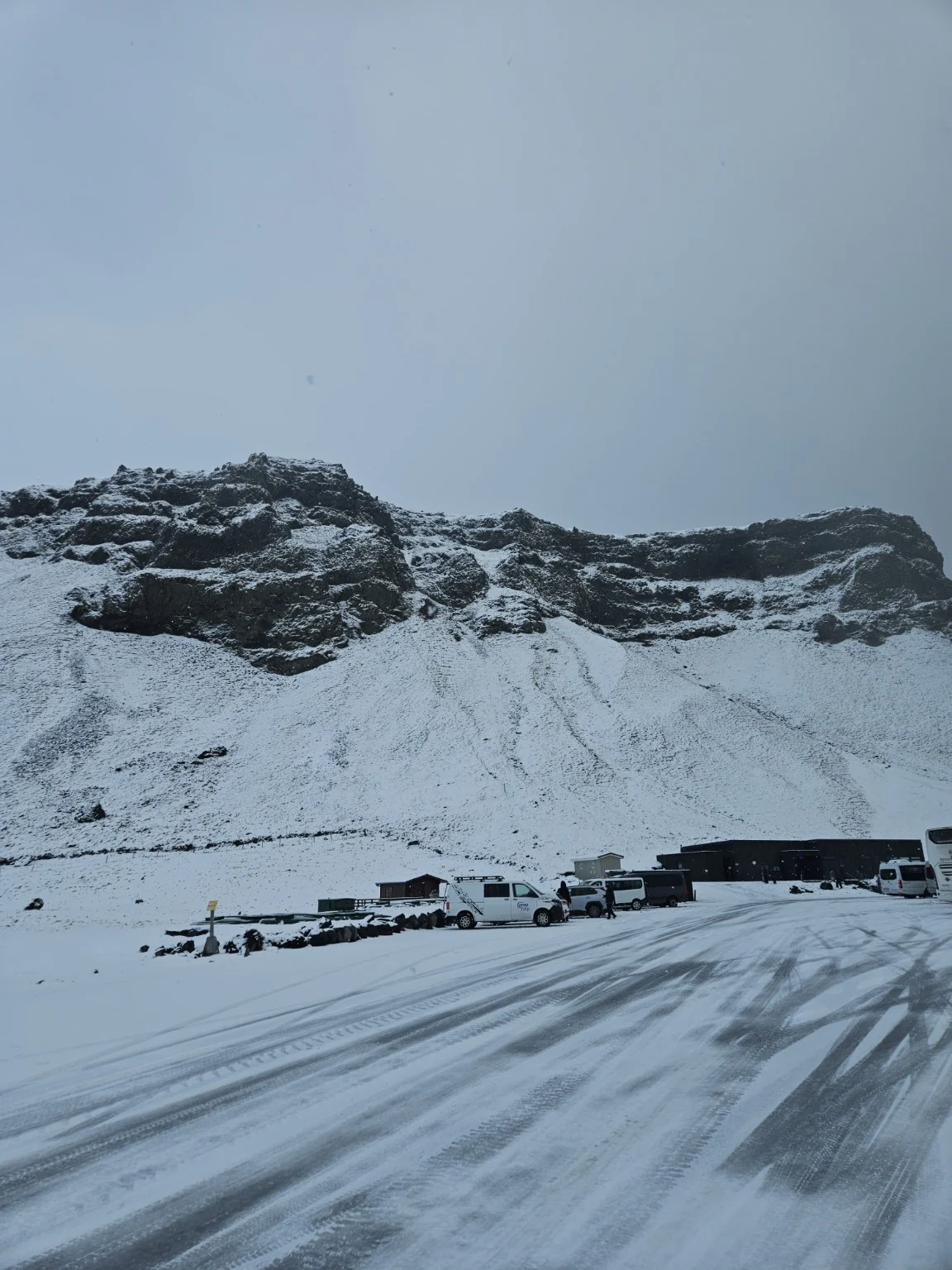
The lot farther from the shore seemed cheaper, so we stopped there for lunch in the car. After walking through the snow for about ten minutes, though, I felt that parking closer would have been worth the extra cost in winter.
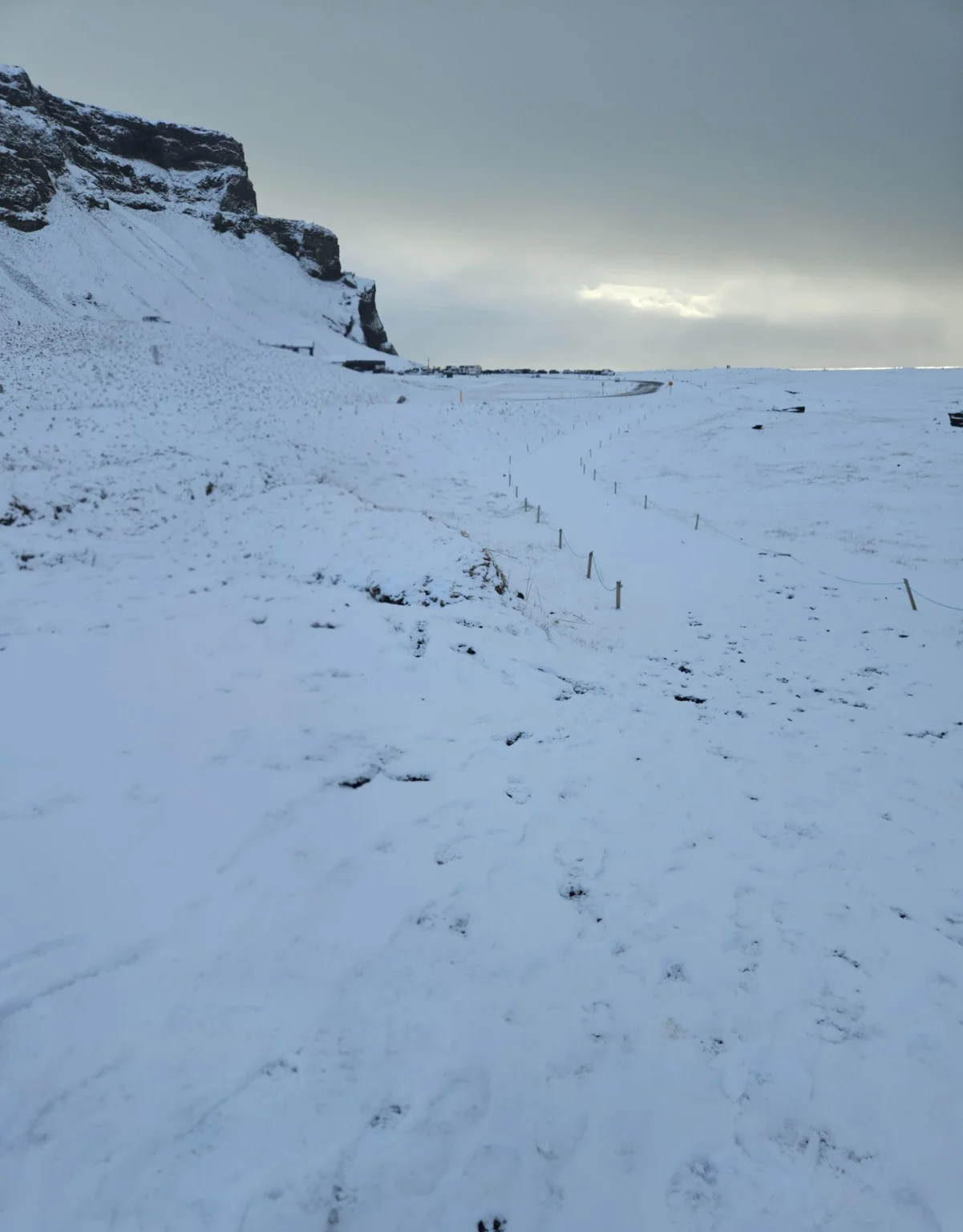
The snowy path brought us to the parking area nearer the beach. Our car was farther away. This nearer lot had public restrooms and a building selling food and drinks.
White surf against black sand
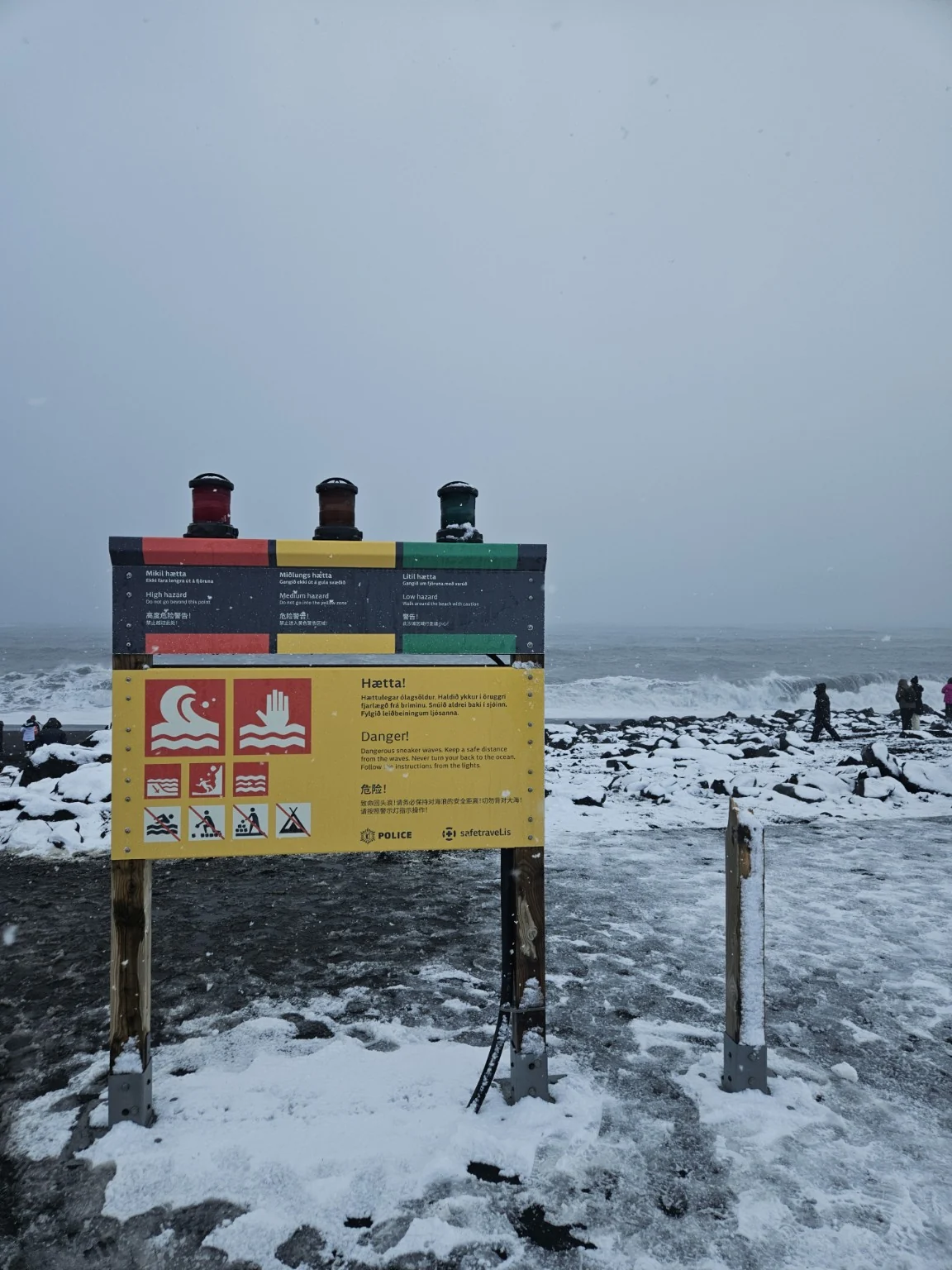
Near the beach entrance stood a wave-warning sign marked with red, yellow and green. At first I wondered how rough the sea could be to warrant such a warning. Once we reached the shore, I understood.
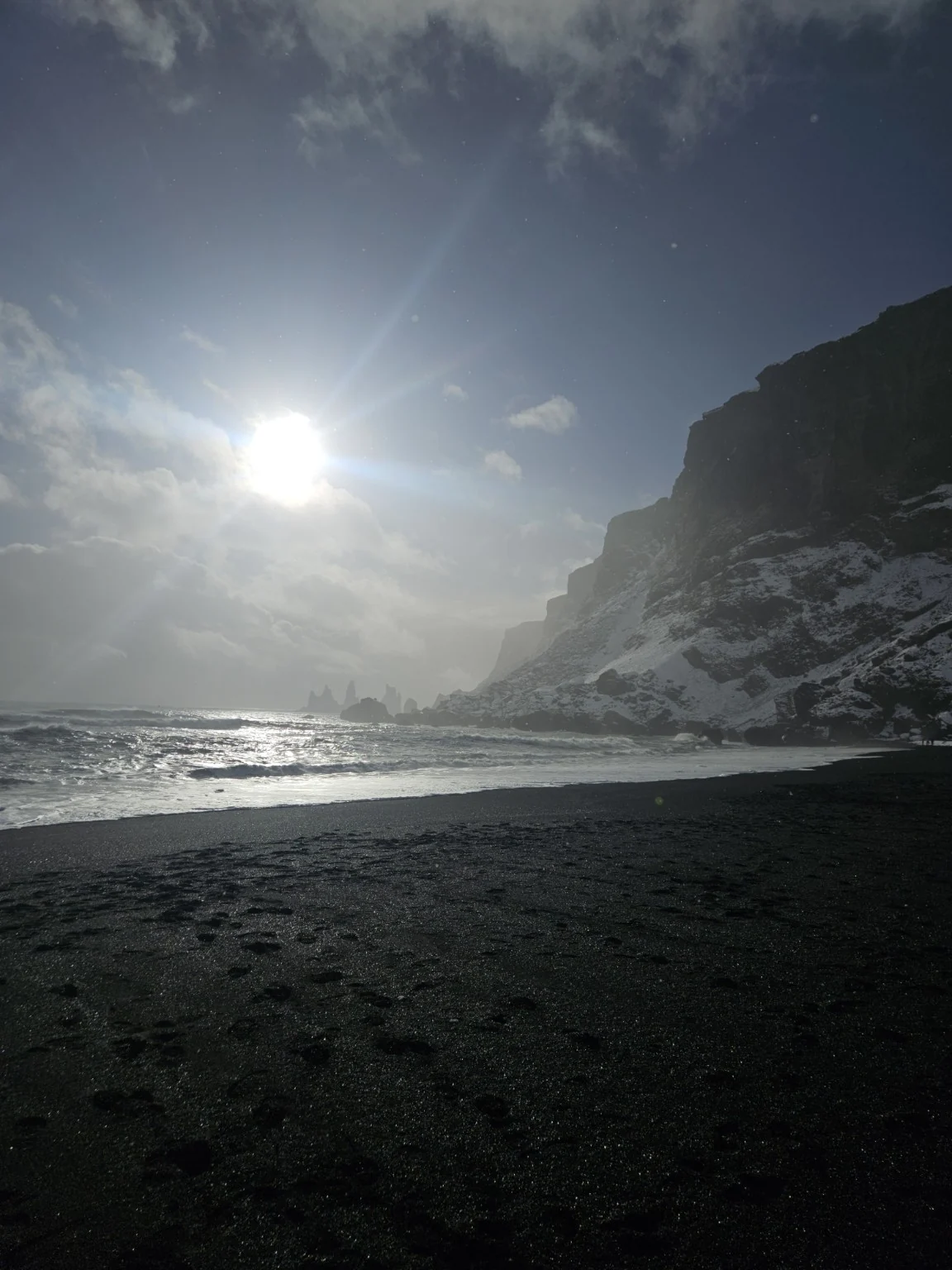
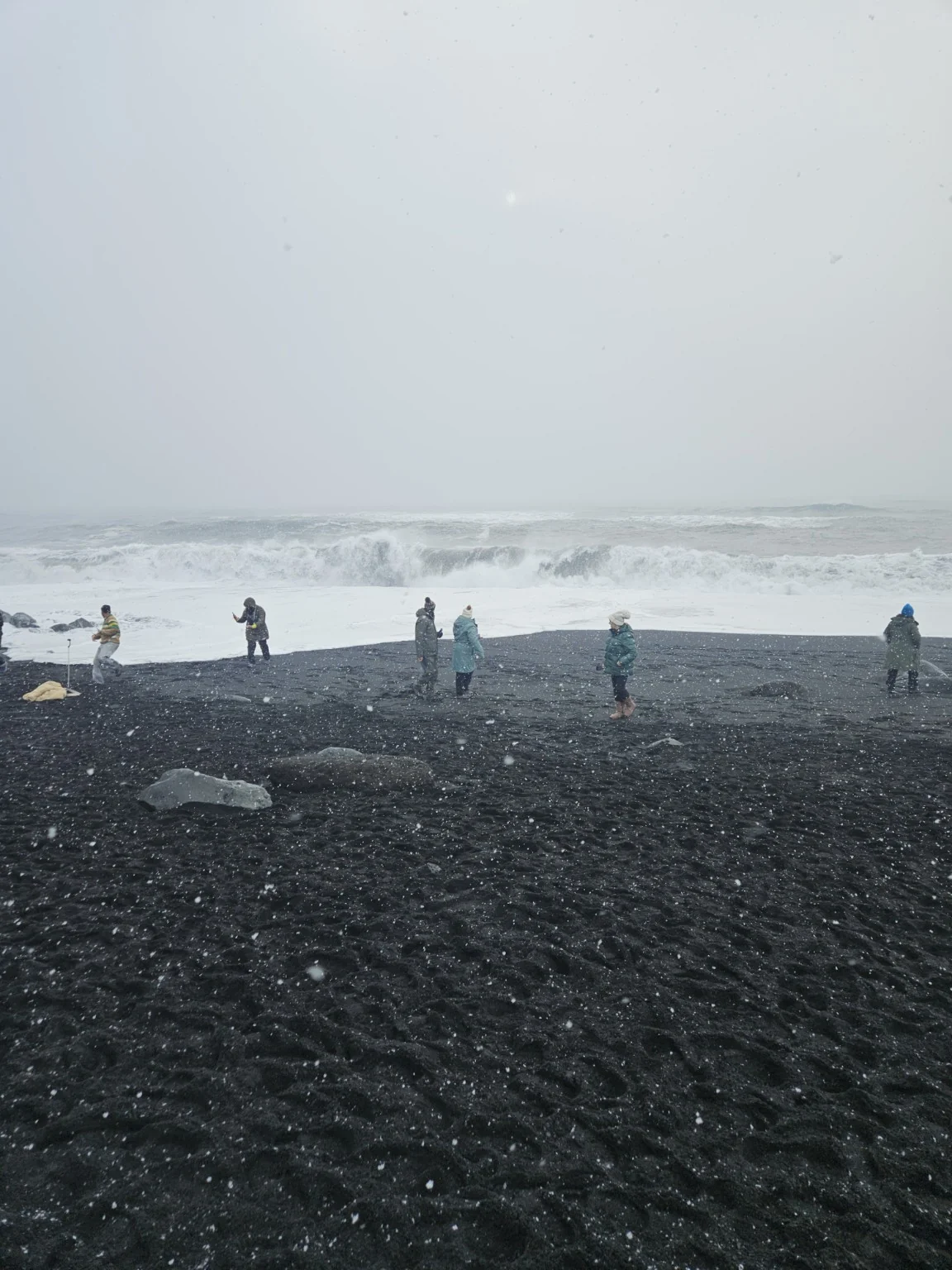
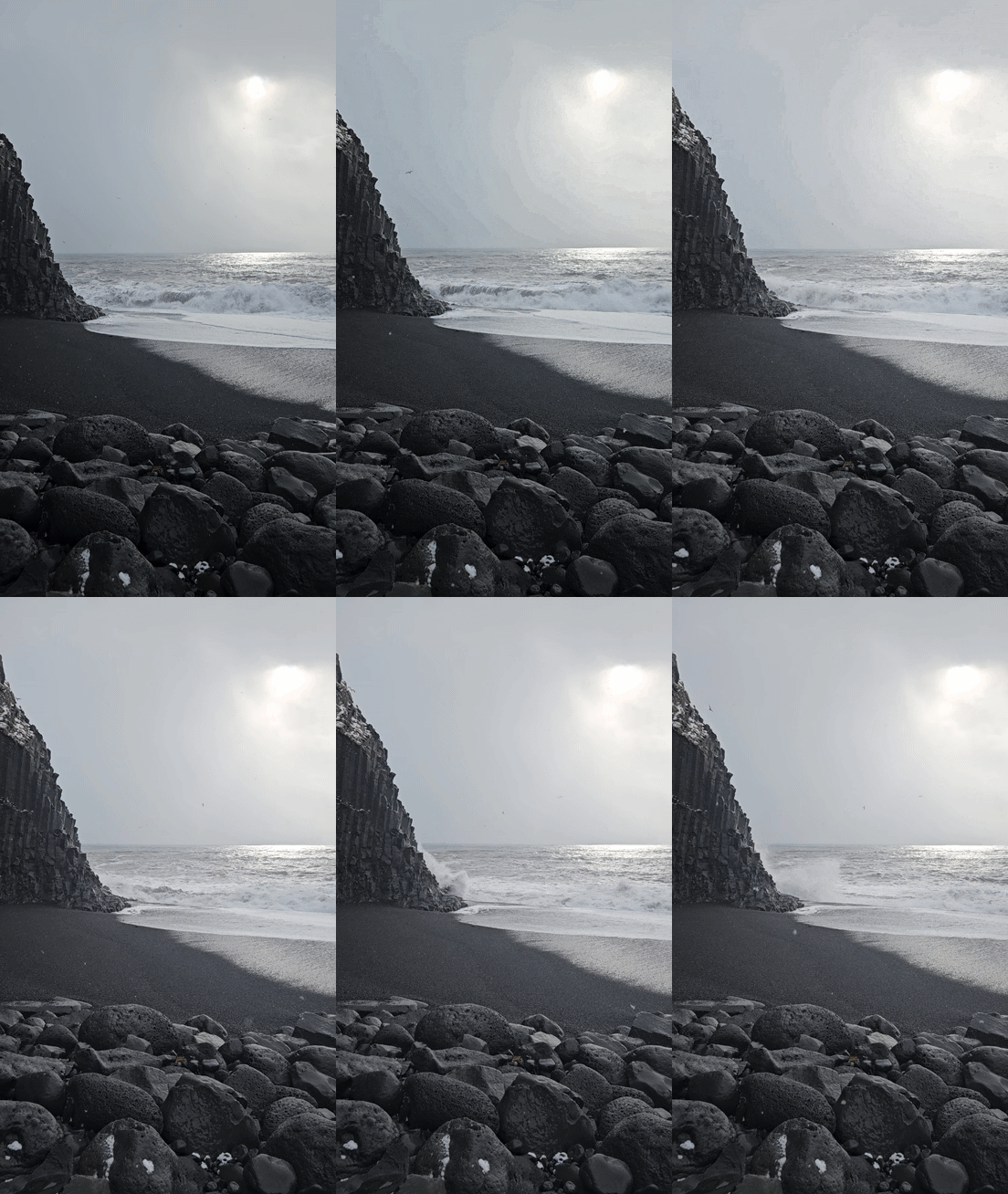
Snow lay over patches of black sand, and huge waves kept breaking into white foam. It was my first black-sand beach, yet the surf held my attention even more than the sand itself.
Photographs couldn’t quite capture the sight of water rushing in and pulling back in front of us.
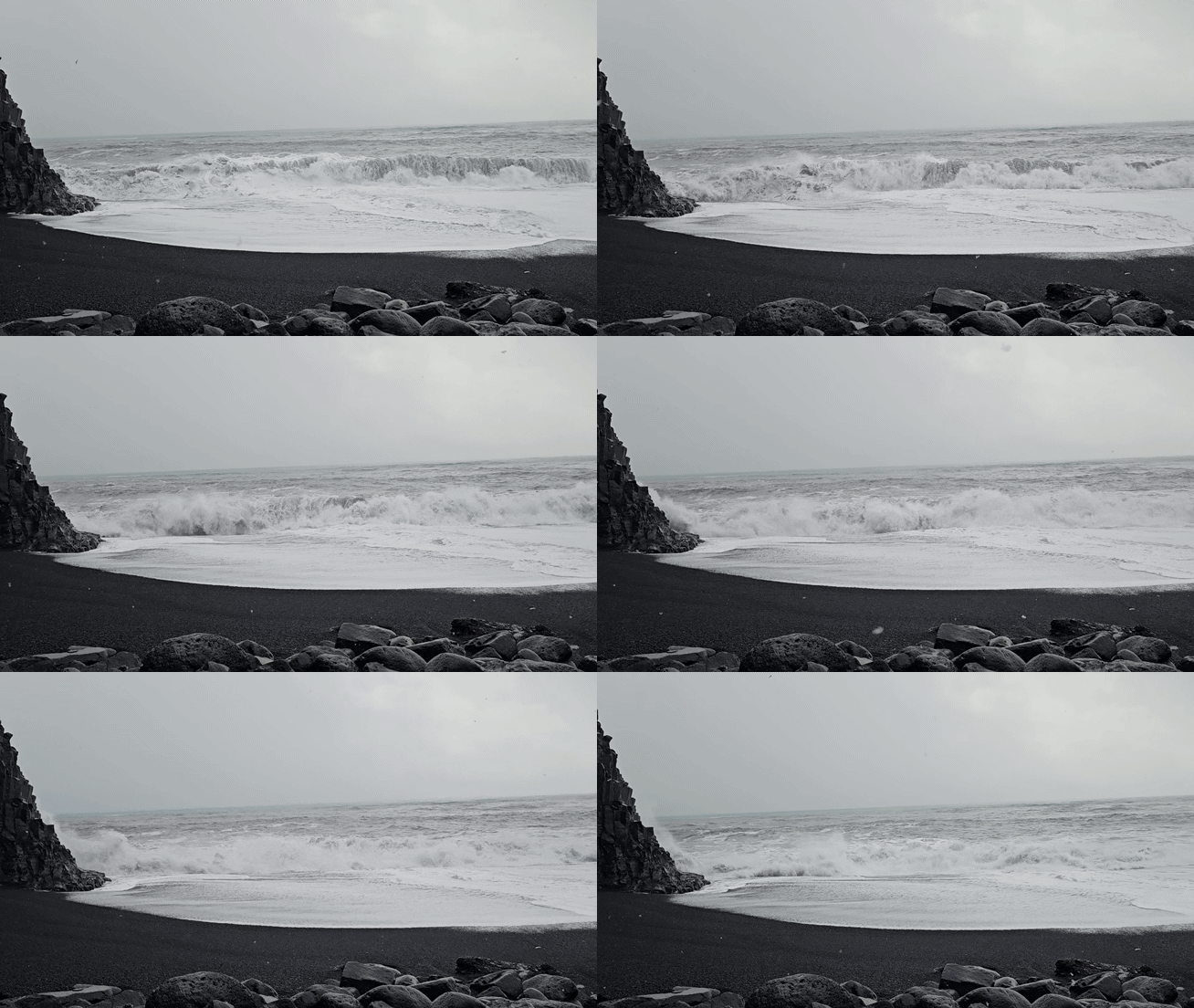
I kept looking up from the camera to watch the sea. As one wave receded, another followed, constantly changing the scene even as snow blew across the shore.
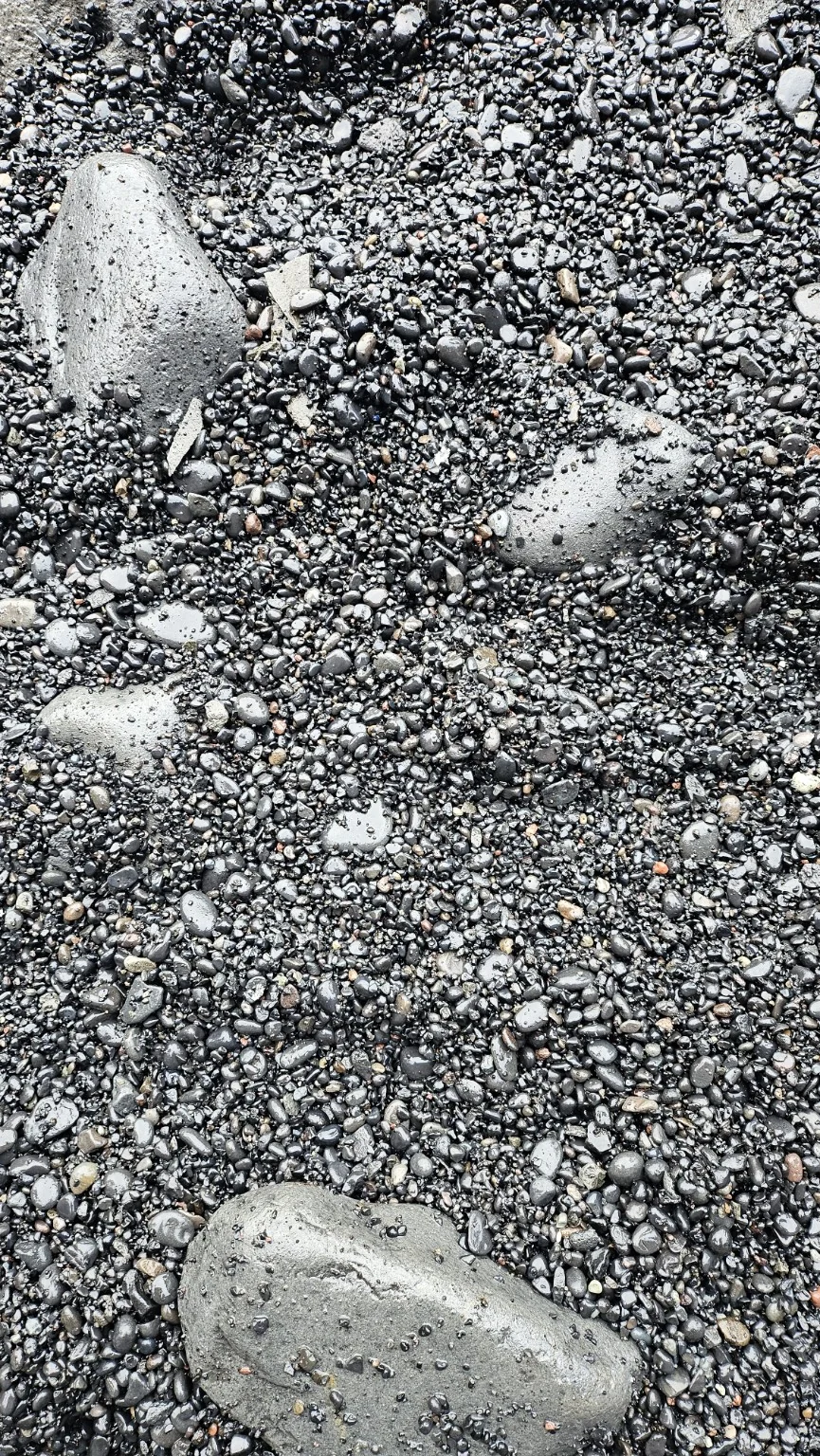
The sand underfoot was a surprise too. Fine black grains were mixed with small rounded pebbles and stones of different sizes. From a distance the beach looked uniformly dark, but up close there was much more texture to it.
Basalt columns above the beach
Turning to the cliff on the left, I saw tall basalt columns standing tightly together. They were much larger up close than they had seemed from a distance. The people nearby helped me appreciate their scale.
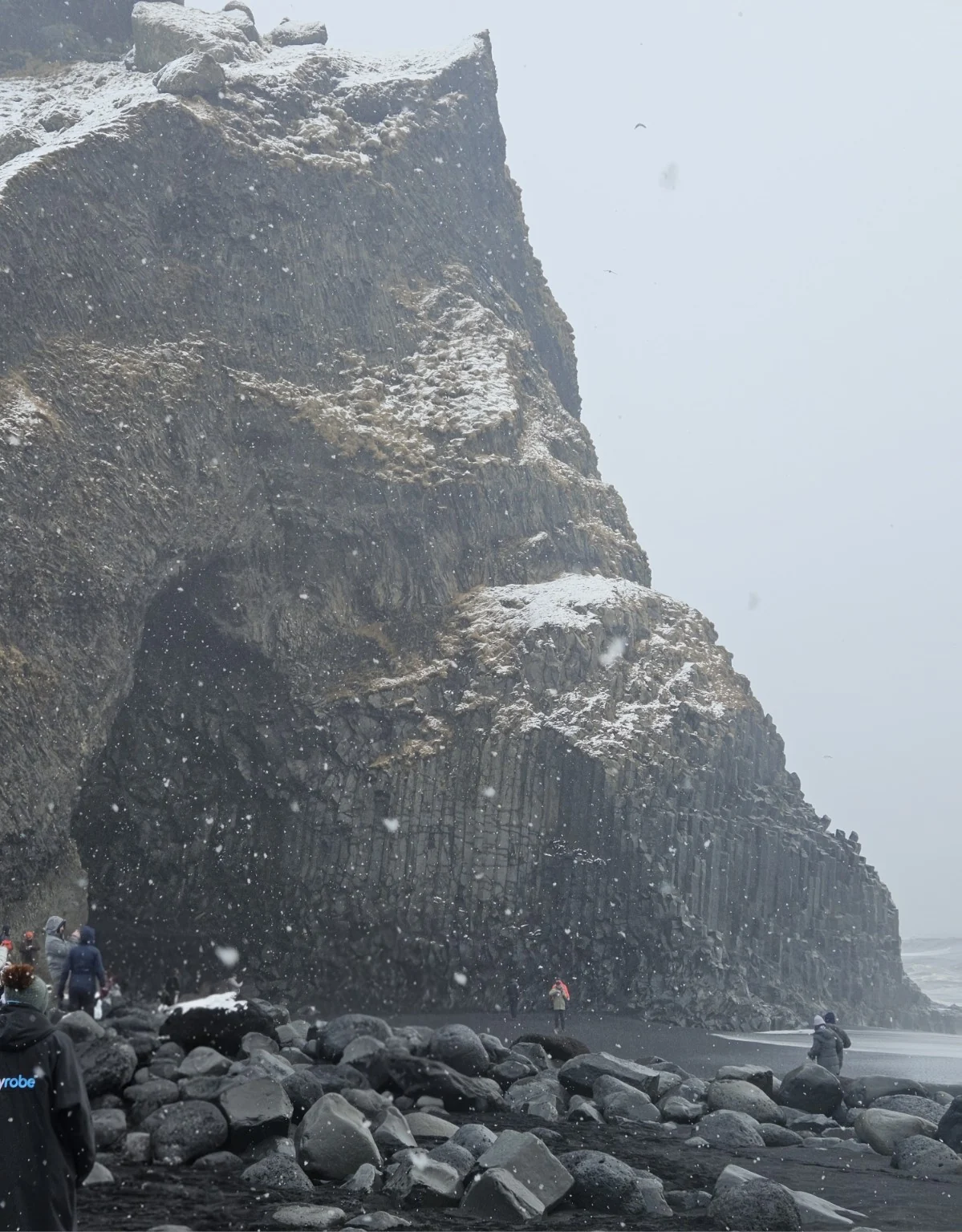
Columnar joints form when hot lava cools and contracts, creating fractures through the rock. I had imagined neat hexagonal pillars, but here some columns bent or changed direction. I spent a long time looking up at those unexpected shapes.
Beside the columns was a deep, cave-like recess in the cliff. During our 2025 visit, we went inside to take photographs and look around. From within, the basalt curved around the opening rather than rising in straight lines.
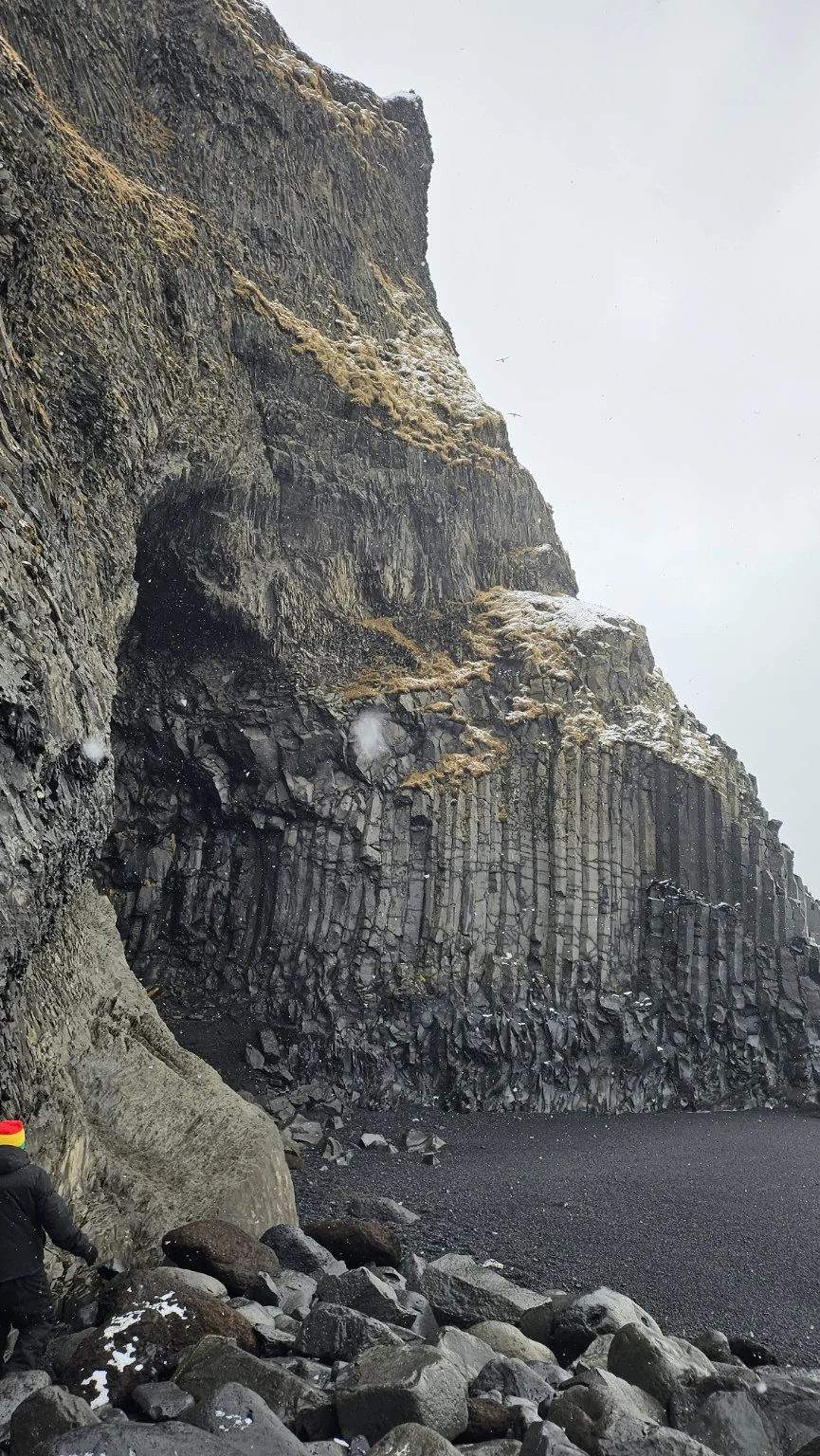
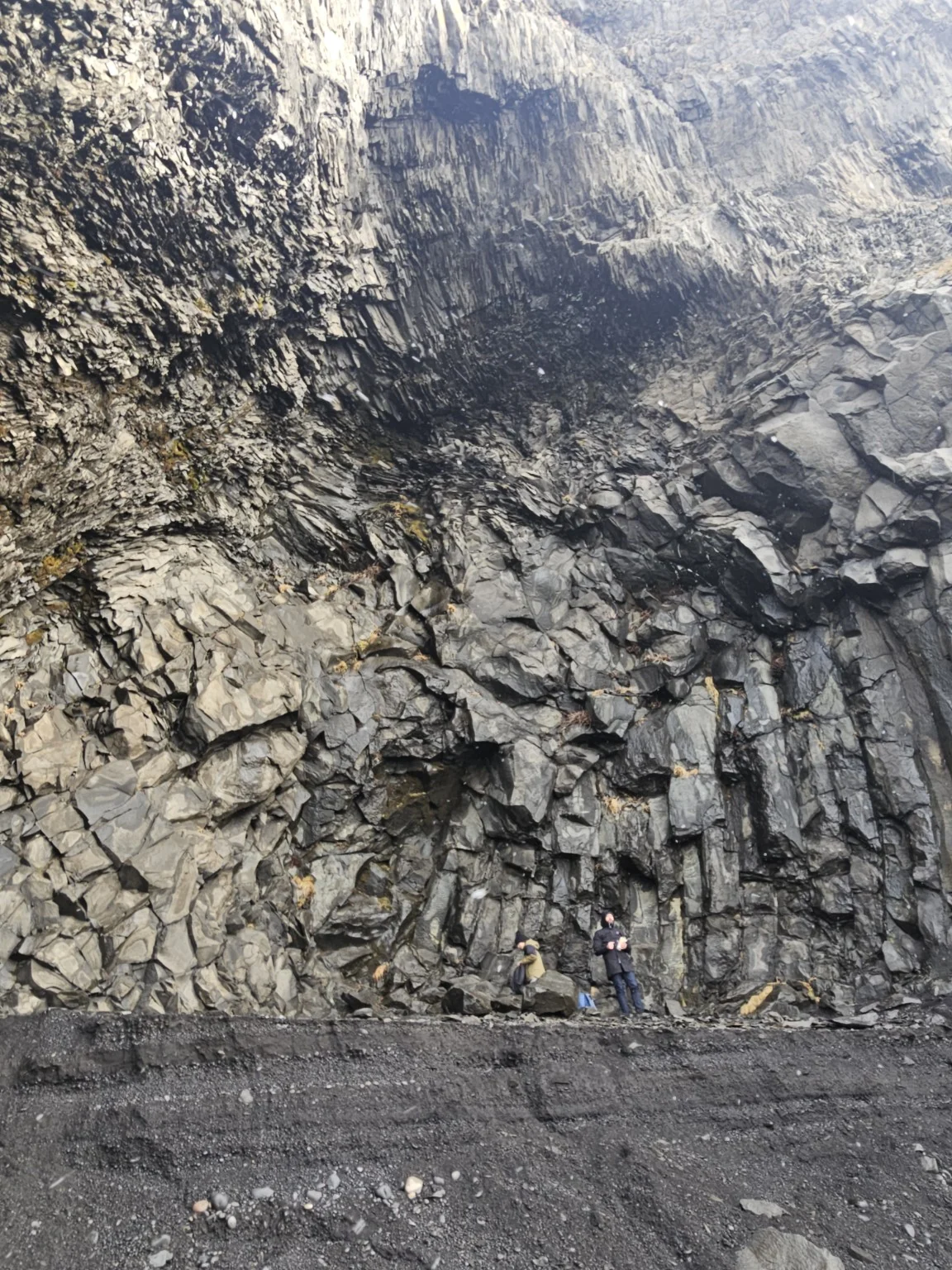
The Hálsanefshellir sea cave is known along this coast. Our photographs of the recessed rock, however, record where we went in 2025. Erosion changed access in 2026, so they do not mean the same areas are safe or open today.
As we prepared to leave, sunlight briefly broke through the snowy clouds, changing the look of the dark cliffs and sea.
I had come to see the black sand, but it was the endless white surf that stayed with me most clearly.
Safety and access today
Sneaker waves at Reynisfjara can surge far up the beach without warning. Never turn your back on the ocean or approach the water’s edge. Rockfall beneath the cliff is also a hazard.
On February 24, 2026, the Icelandic Tourist Board reported severe erosion beneath safety signs and viewing infrastructure, preventing access down to the basalt columns. SafeTravel guidance checked on October 10, 2026 limits visitors to the designated viewpoint. Our 2025 images do not show current access.
The present SafeTravel warning levels are yellow, orange and red. Check official Black Beach Safety guidance and respect on-site closures.
After Reynisfjara, we headed for Víkurfjara and Vík, where an unexpected little moment stayed with us.
Related MomentVík, the Little Zipline Beyond the Black BeachPRACTICAL INFO
- Location: Reynisfjara Black Sand Beach, near Vík, South Iceland
- Visited: February 26, 2025
- Parking locations: There is a lot near the beach and another farther away. In February 2025 we chose the farther one and spent roughly ten minutes walking through the snow.
- Parking fees (reference only): A June 2026 visitor guide lists 1,000 ISK for a standard car at the nearer lot and 750 ISK at the farther one. These are not verified current official prices as of October 2026; confirm the applicable vehicle-specific amount on Parka and the signs on site.
- Payment and hours: Find Reynisfjara (zone 8207) on Parka. Payment is linked to the license plate; Parka allows online payment within 24 hours after leaving. The parking area operates around the clock, but overnight stays are prohibited. Use the on-site sign to choose the correct payment area.
- Restrooms: Public restrooms are available near the parking area closer to the beach. Parka says access to toilet facilities is included in the parking fee.
- Food and drinks: Black Beach Restaurant offers soup, sandwiches, coffee and other refreshments. The official tourism listing says it operates year-round and offers complimentary Wi-Fi; check its current daily hours before visiting.
- Landscape: Black volcanic sand and pebbles, columnar basalt, Hálsanefshellir sea cave
- Access: Coastal erosion has changed the area since 2025; follow SafeTravel and local restrictions
- Hazards: Sneaker waves, falling rocks and winter ice
- Information checked: October 10, 2026